Open Infrastructures #2: the SURF Fediverse
When I first started writing this post, I started writing up why scientific communication is important, but because I started explaining what needs improving, and what are underlying causes why change is not happening, it got dark pretty quickly. So, I deleted that essay again. Instead, let’s just enjoy the awesome and long list of solutions we have for scientific discourse. Readers of my blog can find many posts in the past 20 years about the diversification. One thing I will say before I move one, is a reply to the argument that journal-based peer review is essential to the quality of research: if the quality of your research is dependent on your peers, then please rethink why you are doing research.
Now, about the fediverse…
Mastodon (service by SURF)
Mastodon is one of the more well-known corners of the fediverse, and I blogged about it before. It is intrinsically open, while it has extensive options to make things more private. It is like Twitter but then without the central control. It is unlike Slack, Zulip, and LinkedIn which has clear walls around communities. It also is unlike past efforts like Google Wave and FriendFeed which created much more structured discourse.
But I enjoy Mastodon. It has all the good science, the friendly, helpful people, and I have many options to block people, fediverse servers, and even individual keywords (you can remove anything “PFAS”, for example, something hard in the real world). But you also have linear timeline, with just content of the people you follow.
And, with the SURF social.edu.nl server, every researcher from a SURF-linked research insitute can get an account there via SURFconext (the Mastodon solution may need to be activited by your institute first; if so, ask your institute ICT to enable it). The list of accounts on this SURF Mastodon server shows a veried list of people and organisations, but you can also check this list of 80 Ways to follow Research, Science and Education on Mastodon. Or this list of Wikidata queries.
I think every organization that communicates their research should have at least one open world communication channel, and if they then like to keep their wall-garden LinkedIn account too, that is fine. But societal impact for just a select group of people feels a bit awkward to me.
PeerTube (service by SURF)
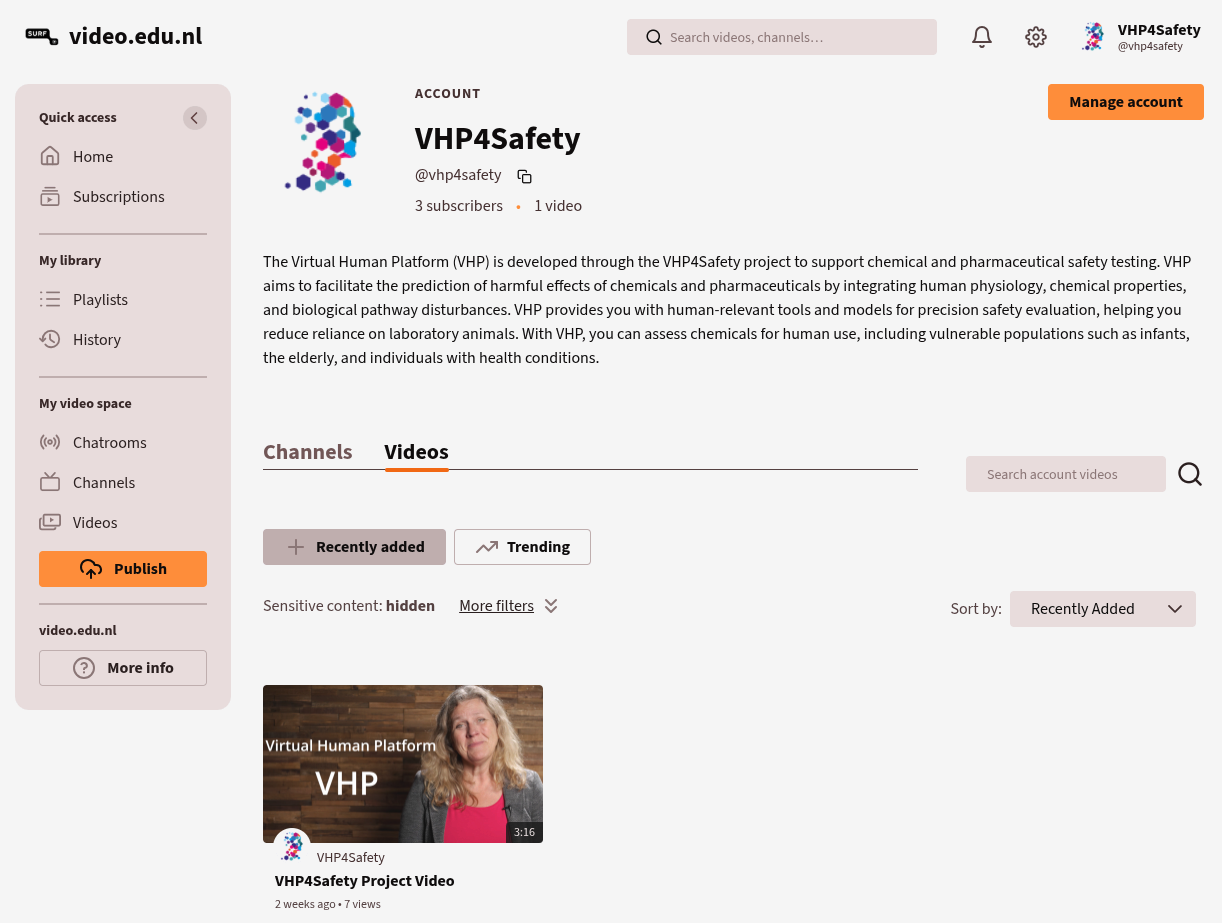
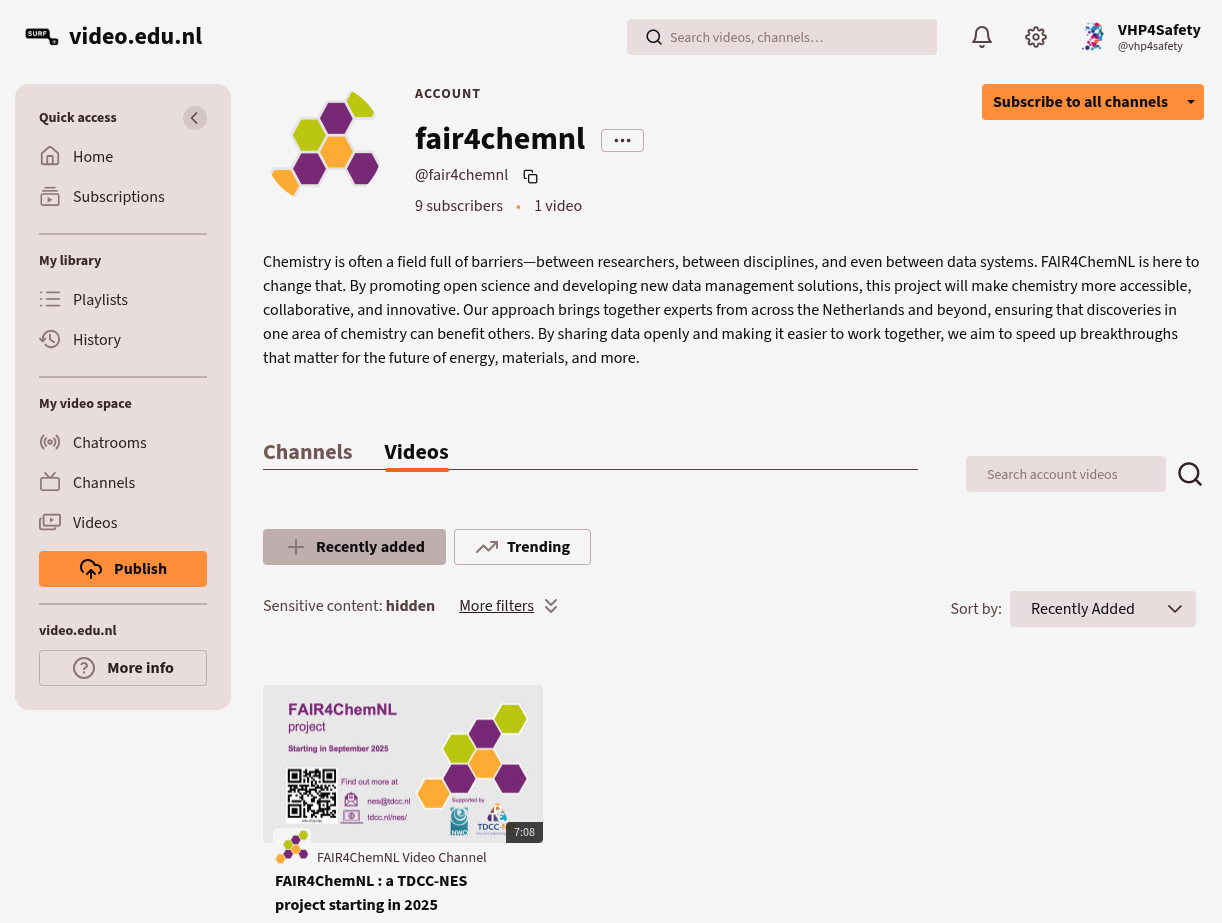
But SURF operates a second fediverse server, one using the PeerTube software, also extended with the SURFconext interoperability. PeerTube is a platform to share videos, like YouTube. Just before the winter holiday, I got the opportunity to create two project accounts on SURF’s video.edu.nl, one for the VHP4Safety project and one for the FAIR4ChemNL project.
The cool thing actually is that SURFconext has group accounts via SURFconext Invite (it was earlier called SURFconext Teams), so these two PeerTube channels are operated by two or more people from the project, and the two videos that are now available, have not actually been uploaded by me.
But I am very excited we now have channels to share our video communication, here for VHP4Safety:
And here for FAIR4ChemNL:
You can use your Mastodon or other ActivityPub-based Fediverse-account to comment on this article by leaving a publicly visible reply to this associated post. Content warnings are supported. You can also delete your comments at any time by deleting your post on the Fediverse.