<?xml version="1.0" encoding="utf-8"?><feed xmlns="http://www.w3.org/2005/Atom" ><generator uri="https://jekyllrb.com/" version="4.3.4">Jekyll</generator><link href="https://chem-bla-ics.linkedchemistry.info/feed/by_tag/toxicology.xml" rel="self" type="application/atom+xml" /><link href="https://chem-bla-ics.linkedchemistry.info/" rel="alternate" type="text/html" /><updated>2026-06-15T12:00:19+00:00</updated><id>https://chem-bla-ics.linkedchemistry.info/feed/by_tag/toxicology.xml</id><title type="html">chem-bla-ics</title><subtitle>Chemblaics (pronounced chem-bla-ics) is the science that uses open science and computers to solve problems in chemistry, biochemistry and related fields.</subtitle><author><name>Egon Willighagen</name></author><entry><title type="html">New paper: FAIR assessment of nanosafety data reusability with community standards</title><link href="https://chem-bla-ics.linkedchemistry.info/2024/06/10/linking-fair-to-reuse.html" rel="alternate" type="text/html" title="New paper: FAIR assessment of nanosafety data reusability with community standards" /><published>2024-06-10T00:00:00+00:00</published><updated>2024-06-10T00:00:00+00:00</updated><id>https://chem-bla-ics.linkedchemistry.info/2024/06/10/linking-fair-to-reuse</id><content type="html" xml:base="https://chem-bla-ics.linkedchemistry.info/2024/06/10/linking-fair-to-reuse.html"><![CDATA[<p><a href="FAIR assessment of nanosafety data reusability with community standards">Ammar</a> is finishing up his PhD thesis with his
research on the use of FAIR towards predictive toxicology. Or, “AI ready”, as the term FAIR is now sometimes explained.
Any computational method needs good data, and just FAIR is not enough. It needs to meet community standards, as formalized
in R1.3. To me, this includes meeting community standards like minimal reporting standards. Indeed, in the
<a href="https://www.nanosafetycluster.eu/">EU NanoSafety Cluster</a> the notion that FAIR data also needs be scientifically
good data is well noted.</p>

<p>In this paper (doi:<a href="https://doi.org/10.1038/s41597-024-03324-x">10.1038/s41597-024-03324-x</a>),
Ammar explores this notion and compiled more than 200 maturity indicators in the category R1.3
resulting from 12 different community standards. For example, this includes minimal reporting standards. There
is overlap in needs, but they often also have a different focus. The conclusion here: different (re)use cases
have different needs, and data not usable to one use case can be sufficiently FAIR for another. Of course, ideally,
it would be FAIR enough for all use cases.</p>

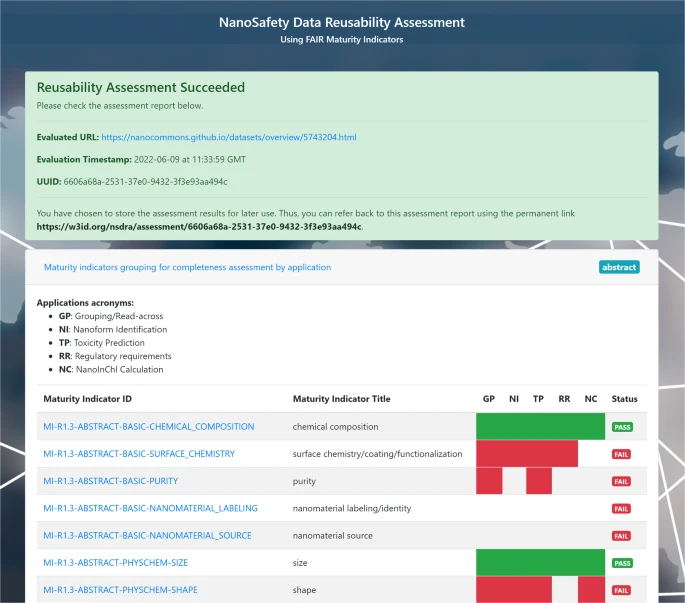
<p>Ammar formalizes the maturity indicators and links the comming maturity indicators to various use cases.
That means that when you determine the indicator values for your data, people can immediately lookup how
this data can be reused. And, the generator of the data can immediately see how the data would need to be
improved to widen the reusability. How FAIR can we get?</p>

<p>His proposal has already been further explored in two other papers, one around data sharing
(doi:<a href="https://doi.org/10.1038/s41596-024-00993-1">10.1038/s41596-024-00993-1</a>, see also
<a href="https://doi.org/10.59350/vfvwq-s0v13">this blog post</a>) and one around QSAR modelling
(doi:<a href="https://doi.org/10.1016/j.impact.2023.100475">10.1016/j.impact.2023.100475</a>,
see also <a href="https://doi.org/10.59350/7zf38-w9670">this blog post</a>).</p>

<p>The below screenshot shows what an analysis using this approach can look like:</p>

<p><img src="/assets/images/41597_2024_3324_Fig3_HTML.png" alt="" /></p>]]></content><author><name>Egon Willighagen</name></author><category term="fair" /><category term="toxicology" /><category term="doi:10.1038/S41597-024-03324-X" /><category term="doi:10.1016/J.IMPACT.2023.100475" /><category term="qsar" /><category term="doi:10.1038/S41596-024-00993-1" /><summary type="html"><![CDATA[Ammar is finishing up his PhD thesis with his research on the use of FAIR towards predictive toxicology. Or, “AI ready”, as the term FAIR is now sometimes explained. Any computational method needs good data, and just FAIR is not enough. It needs to meet community standards, as formalized in R1.3. To me, this includes meeting community standards like minimal reporting standards. Indeed, in the EU NanoSafety Cluster the notion that FAIR data also needs be scientifically good data is well noted.]]></summary><media:thumbnail xmlns:media="http://search.yahoo.com/mrss/" url="https://chem-bla-ics.linkedchemistry.info/assets/images/41597_2024_3324_Fig3_HTML.png" /><media:content medium="image" url="https://chem-bla-ics.linkedchemistry.info/assets/images/41597_2024_3324_Fig3_HTML.png" xmlns:media="http://search.yahoo.com/mrss/" /></entry><entry><title type="html">Community activity #2: FAIRsharing</title><link href="https://chem-bla-ics.linkedchemistry.info/2023/06/11/community-activity-2-fairsharing.html" rel="alternate" type="text/html" title="Community activity #2: FAIRsharing" /><published>2023-06-11T00:00:00+00:00</published><updated>2023-06-11T00:00:00+00:00</updated><id>https://chem-bla-ics.linkedchemistry.info/2023/06/11/community-activity-2-fairsharing</id><content type="html" xml:base="https://chem-bla-ics.linkedchemistry.info/2023/06/11/community-activity-2-fairsharing.html"><![CDATA[<p>Some years ago we started the <a href="https://elixir-europe.org/communities/toxicology">ELIXIR Toxicology Community</a>. It has been an interesting journey,
partly covered in <a href="https://f1000research.com/articles/10-1129/v1">this whitepaper</a>). We started with interaction we had in several projects already,
but particularly the potential. I see this. This series of posts is a number of things toxicology projects can do to benefit from ELIXIR solutions
(“<a href="https://elixir-europe.org/services">services</a>”). The posts have been sent first to the ELIXIR Toxicology Community mailing list (please join!).</p>

<h3 id="history">History</h3>

<p>In this post, let’s look at <a href="https://fairsharing.org/">FAIRsharing</a>. It is “A curated, informative and educational resource on data and metadata standards,
inter-related to databases and data policies” [0,1].</p>

<p>The ELIXIR Toxicology Community (we) maintains the toxicology corner of this database and members of our community have been adding toxicology-related
databases, relevant standards. On the side of the policies we are falling a bit short:
<a href="https://fairsharing.org/Toxicology">fairsharing.org/Toxicology</a>.</p>

<h3 id="why-adopt-fairsharing">Why adopt FAIRsharing</h3>

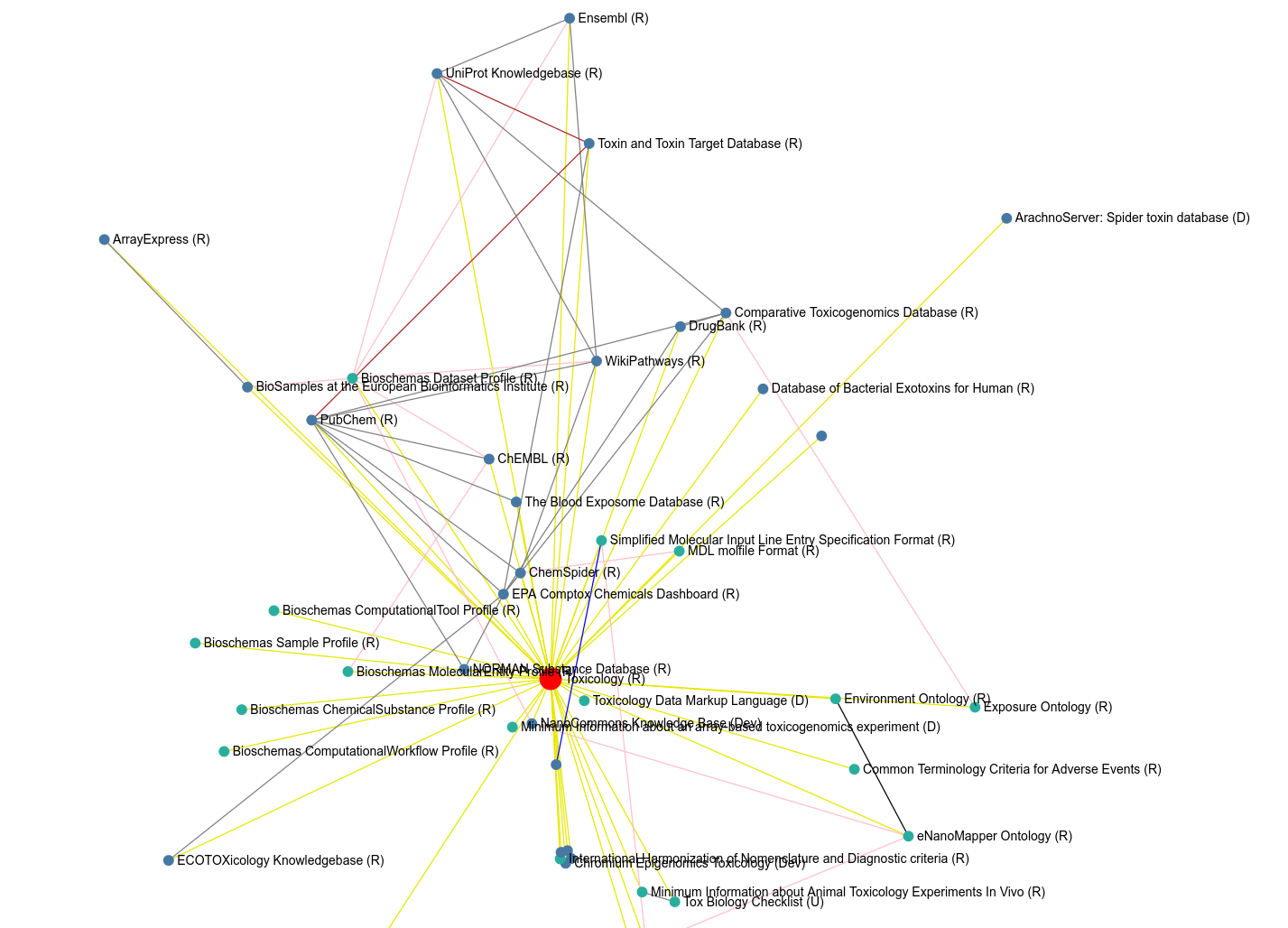
<p>FAIRsharing is one place where metadata can be shared about your databases. It helps make your resources and research more FAIR and explains people
how your work relates to other work (<a href="https://fairsharing.org/graph/3496">fairsharing.org/graph/3496</a>):</p>

<p><img src="/assets/images/fairsharing_toxicology.png" alt="Screenshot of the 'collects' graph of the FAIRsharing Toxicology Community." /></p>

<h3 id="what-you-can-do">What you can do</h3>

<p>Get an account (with your ORCID or GitHub account) and add resources important to your research, your projects, your work generally. Particularly,
(data) policies and standards you are expected to comply with are useful. Also, links between various resources. For example, if some (project)
database complies with an important policy or standards, this is worth seeing show up.</p>

<p>Alternatively, join the ELIXIR Toxicology Community <a href="https://doi.org/10.1162/dint_r_00024">mailing list</a> and post the missing resource there,
or use our issue tracker at <a href="https://github.com/elixir-europe/toxicology-community/issues/">github.com/elixir-europe/toxicology-community/issues/</a>.</p>

<p>Let’s make toxicology more <a href="https://doi.org/10.1162/dint_r_00024">FAIR</a>.</p>

<p>0.<a href="https://www.nature.com/articles/s41587-019-0080-8">https://www.nature.com/articles/s41587-019-0080-8</a>
1.<a href="https://scholia.toolforge.org/work/Q64084285">https://scholia.toolforge.org/work/Q64084285</a></p>]]></content><author><name>Egon Willighagen</name></author><category term="elixir" /><category term="fair" /><category term="toxicology" /><category term="doi:10.12688/f1000research.74502.1" /><category term="justdoi:10.1038/s41587-019-0080-8" /><category term="doi:10.1162/dint_r_00024" /><summary type="html"><![CDATA[Some years ago we started the ELIXIR Toxicology Community. It has been an interesting journey, partly covered in this whitepaper). We started with interaction we had in several projects already, but particularly the potential. I see this. This series of posts is a number of things toxicology projects can do to benefit from ELIXIR solutions (“services”). The posts have been sent first to the ELIXIR Toxicology Community mailing list (please join!).]]></summary><media:thumbnail xmlns:media="http://search.yahoo.com/mrss/" url="https://chem-bla-ics.linkedchemistry.info/assets/images/fairsharing_toxicology.png" /><media:content medium="image" url="https://chem-bla-ics.linkedchemistry.info/assets/images/fairsharing_toxicology.png" xmlns:media="http://search.yahoo.com/mrss/" /></entry><entry><title type="html">Data Curation: 5% inspiration, 95% frustration (cleaning up data inconsistencies)</title><link href="https://chem-bla-ics.linkedchemistry.info/2018/09/16/data-curation-5-inspiration-95.html" rel="alternate" type="text/html" title="Data Curation: 5% inspiration, 95% frustration (cleaning up data inconsistencies)" /><published>2018-09-16T00:00:00+00:00</published><updated>2018-09-16T00:00:00+00:00</updated><id>https://chem-bla-ics.linkedchemistry.info/2018/09/16/data-curation-5-inspiration-95</id><content type="html" xml:base="https://chem-bla-ics.linkedchemistry.info/2018/09/16/data-curation-5-inspiration-95.html"><![CDATA[<p><span style="width: 40%; display: block; margin-left: auto; margin-right: auto; float: right">
<img src="/assets/images/Screenshot_20180916_170915.png" /> <br />
Slice of the spreadsheet in the supplementary info.
</span></p>

<p>Just some bit of cleaning I scripted today for a number of toxicology end points in a database published some time ago the
zero-APC Open Access (CC_BY) journal <a href="https://www.beilstein-journals.org/bjnano/">Beilstein of Journal of Nanotechnology</a>,
NanoE-Tox (doi:<a href="https://www.beilstein-journals.org/bjnano/articles/6/183">10.3762/bjnano.6.183</a>).</p>

<p>The curation I am doing is to redistribute the data in the eNanoMapper database (see doi:<a href="https://doi.org/10.3762/bjnano.6.165/">10.3762/bjnano.6.165</a>)
and thus with ontology annotation (see doi:<a href="https://doi.org/10.1186/s13326-015-0005-5">10.1186/s13326-015-0005-5</a>):</p>

<div class="language-groovy highlighter-rouge"><div class="highlight"><pre class="highlight"><code><span class="n">recognizedToxicities</span> <span class="o">=</span> <span class="o">[</span>
  <span class="s2">"EC10"</span><span class="o">:</span> <span class="s2">"http://www.bioassayontology.org/bao#BAO_0001263"</span><span class="o">,</span>
  <span class="s2">"EC20"</span><span class="o">:</span> <span class="s2">"http://www.bioassayontology.org/bao#BAO_0001235"</span><span class="o">,</span>
  <span class="s2">"EC25"</span><span class="o">:</span> <span class="s2">"http://www.bioassayontology.org/bao#BAO_0001264"</span><span class="o">,</span>
  <span class="s2">"EC30"</span><span class="o">:</span> <span class="s2">"http://www.bioassayontology.org/bao#BAO_0000599"</span><span class="o">,</span>
  <span class="s2">"EC50"</span><span class="o">:</span> <span class="s2">"http://www.bioassayontology.org/bao#BAO_0000188"</span><span class="o">,</span>
  <span class="s2">"EC80"</span><span class="o">:</span> <span class="s2">"http://purl.enanomapper.org/onto/ENM_0000053"</span><span class="o">,</span>
  <span class="s2">"EC90"</span><span class="o">:</span> <span class="s2">"http://www.bioassayontology.org/bao#BAO_0001237"</span><span class="o">,</span>
  <span class="s2">"IC50"</span><span class="o">:</span> <span class="s2">"http://www.bioassayontology.org/bao#BAO_0000190"</span><span class="o">,</span>
  <span class="s2">"LC50"</span><span class="o">:</span> <span class="s2">"http://www.bioassayontology.org/bao#BAO_0002145"</span><span class="o">,</span>
  <span class="s2">"MIC"</span><span class="o">:</span>  <span class="s2">"http://www.bioassayontology.org/bao#BAO_0002146"</span><span class="o">,</span>
  <span class="s2">"NOEC"</span><span class="o">:</span> <span class="s2">"http://purl.enanomapper.org/onto/ENM_0000060"</span><span class="o">,</span>
  <span class="s2">"NOEL"</span><span class="o">:</span> <span class="s2">"http://purl.enanomapper.org/onto/ENM_0000056"</span>
<span class="o">]</span>
</code></pre></div></div>

<p>With 402(!) variants left. Many do not have an ontology term yet, and I
<a href="https://github.com/enanomapper/ontologies/issues/143">filed a feature request</a>.</p>

<p>Units:</p>

<div class="language-groovy highlighter-rouge"><div class="highlight"><pre class="highlight"><code><span class="n">recognizedUnits</span> <span class="o">=</span> <span class="o">[</span>
  <span class="s2">"g/L"</span><span class="o">:</span> <span class="s2">"g/L"</span><span class="o">,</span>
  <span class="s2">"g/l"</span><span class="o">:</span> <span class="s2">"g/l"</span><span class="o">,</span>
  <span class="s2">"mg/L"</span><span class="o">:</span> <span class="s2">"mg/L"</span><span class="o">,</span>
  <span class="s2">"mg/ml"</span><span class="o">:</span> <span class="s2">"mg/ml"</span><span class="o">,</span>
  <span class="s2">"mg/mL"</span><span class="o">:</span> <span class="s2">"mg/mL"</span><span class="o">,</span>
  <span class="s2">"µg/L of food"</span><span class="o">:</span> <span class="s2">"µg/L"</span><span class="o">,</span>
  <span class="s2">"µg/L"</span><span class="o">:</span> <span class="s2">"µg/L"</span><span class="o">,</span>
  <span class="s2">"µg/mL"</span><span class="o">:</span> <span class="s2">"µg/mL"</span><span class="o">,</span>
  <span class="s2">"mg Ag/L"</span><span class="o">:</span> <span class="s2">"mg/L"</span><span class="o">,</span>
  <span class="s2">"mg Cu/L"</span><span class="o">:</span> <span class="s2">"mg/L"</span><span class="o">,</span>
  <span class="s2">"mg Zn/L"</span><span class="o">:</span> <span class="s2">"mg/L"</span><span class="o">,</span>
  <span class="s2">"µg dissolved Cu/L"</span><span class="o">:</span> <span class="s2">"µg/L"</span><span class="o">,</span>
  <span class="s2">"µg dissolved Zn/L"</span><span class="o">:</span> <span class="s2">"µg/L"</span><span class="o">,</span>
  <span class="s2">"µg Ag/L"</span><span class="o">:</span> <span class="s2">"µg/L"</span><span class="o">,</span>
  <span class="s2">"fmol/L"</span><span class="o">:</span> <span class="s2">"fmol/L"</span><span class="o">,</span>

  <span class="s2">"mmol/g"</span><span class="o">:</span> <span class="s2">"mmol/g"</span><span class="o">,</span>
  <span class="s2">"nmol/g fresh weight"</span><span class="o">:</span> <span class="s2">"nmol/g"</span><span class="o">,</span>
  <span class="s2">"µg Cu/g"</span><span class="o">:</span> <span class="s2">"µg/g"</span><span class="o">,</span>
  <span class="s2">"mg Ag/kg"</span><span class="o">:</span> <span class="s2">"mg/kg"</span><span class="o">,</span>
  <span class="s2">"mg Zn/kg"</span><span class="o">:</span> <span class="s2">"mg/kg"</span><span class="o">,</span>
  <span class="s2">"mg Zn/kg  d.w."</span><span class="o">:</span> <span class="s2">"mg/kg"</span><span class="o">,</span>
  <span class="s2">"mg/kg of dry feed"</span><span class="o">:</span> <span class="s2">"mg/kg"</span><span class="o">,</span>
  <span class="s2">"mg/kg"</span><span class="o">:</span> <span class="s2">"mg/kg"</span><span class="o">,</span>
  <span class="s2">"g/kg"</span><span class="o">:</span> <span class="s2">"g/kg"</span><span class="o">,</span>
  <span class="s2">"µg/g dry weight sediment"</span><span class="o">:</span> <span class="s2">"µg/g"</span><span class="o">,</span>
  <span class="s2">"µg/g"</span><span class="o">:</span> <span class="s2">"µg/g"</span>
<span class="o">]</span>
</code></pre></div></div>

<p>Oh, and don’t get me started on actual values, with endpoint values, as ranges, errors, etc. That variety is
not the problem, but the lack of FAIR-ness makes the whole really hard to process. I now have something like:</p>

<div class="language-groovy highlighter-rouge"><div class="highlight"><pre class="highlight"><code><span class="n">prop</span> <span class="o">=</span> <span class="n">prop</span><span class="o">.</span><span class="na">replace</span><span class="o">(</span><span class="s2">","</span><span class="o">,</span> <span class="s2">"."</span><span class="o">)</span>
<span class="k">if</span> <span class="o">(</span><span class="n">prop</span><span class="o">.</span><span class="na">substring</span><span class="o">(</span><span class="mi">1</span><span class="o">).</span><span class="na">contains</span><span class="o">(</span><span class="s2">"-"</span><span class="o">))</span> <span class="o">{</span>
  <span class="n">rdf</span><span class="o">.</span><span class="na">addTypedDataProperty</span><span class="o">(</span>
    <span class="n">store</span><span class="o">,</span> <span class="n">endpointIRI</span><span class="o">,</span> <span class="s2">"${oboNS}STATO_0000035"</span><span class="o">,</span>
    <span class="n">prop</span><span class="o">,</span> <span class="s2">"${xsdNS}string"</span>
  <span class="o">)</span>
  <span class="n">rdf</span><span class="o">.</span><span class="na">addDataProperty</span><span class="o">(</span>
    <span class="n">store</span><span class="o">,</span> <span class="n">endpointIRI</span><span class="o">,</span> <span class="s2">"${ssoNS}has-unit"</span><span class="o">,</span> <span class="n">units</span>
  <span class="o">)</span>
<span class="o">}</span> <span class="k">else</span> <span class="k">if</span> <span class="o">(</span><span class="n">prop</span><span class="o">.</span><span class="na">contains</span><span class="o">(</span><span class="s2">"±"</span><span class="o">))</span> <span class="o">{</span>
  <span class="n">rdf</span><span class="o">.</span><span class="na">addTypedDataProperty</span><span class="o">(</span>
    <span class="n">store</span><span class="o">,</span> <span class="n">endpointIRI</span><span class="o">,</span> <span class="s2">"${oboNS}STATO_0000035"</span><span class="o">,</span>
    <span class="n">prop</span><span class="o">,</span> <span class="s2">"${xsdNS}string"</span>
  <span class="o">)</span>
  <span class="n">rdf</span><span class="o">.</span><span class="na">addDataProperty</span><span class="o">(</span>
    <span class="n">store</span><span class="o">,</span> <span class="n">endpointIRI</span><span class="o">,</span> <span class="s2">"${ssoNS}has-unit"</span><span class="o">,</span> <span class="n">units</span>
  <span class="o">)</span>
<span class="o">}</span> <span class="k">else</span> <span class="k">if</span> <span class="o">(</span><span class="n">prop</span><span class="o">.</span><span class="na">contains</span><span class="o">(</span><span class="s2">"&lt;"</span><span class="o">))</span> <span class="o">{</span>
<span class="o">}</span> <span class="k">else</span> <span class="o">{</span>
  <span class="n">rdf</span><span class="o">.</span><span class="na">addTypedDataProperty</span><span class="o">(</span>
    <span class="n">store</span><span class="o">,</span> <span class="n">endpointIRI</span><span class="o">,</span> <span class="s2">"${ssoNS}has-value"</span><span class="o">,</span> <span class="n">prop</span><span class="o">,</span>
    <span class="s2">"${xsdNS}double"</span>
  <span class="o">)</span>
  <span class="n">rdf</span><span class="o">.</span><span class="na">addDataProperty</span><span class="o">(</span>
    <span class="n">store</span><span class="o">,</span> <span class="n">endpointIRI</span><span class="o">,</span> <span class="s2">"${ssoNS}has-unit"</span><span class="o">,</span> <span class="n">units</span>
  <span class="o">)</span>
<span class="o">}</span>
</code></pre></div></div>

<p>But let me make clear: I can actually do this, add more data to the eNanoMapper database (with
<a href="https://tools.wmflabs.org/scholia/github/vedina">Nina</a>), only because the developers of this database made their data
available under an Open license (CC-BY, to be precise), allowing me to reuse, modify (change format), and redistribute
it. Thanks to the authors. Data curation is expensive, whether I do it, or if the authors of the database did. They
already did a lot of data curation. But only because of Open licenses, <strong>we only have to do this once</strong>.</p>]]></content><author><name>Egon Willighagen</name></author><category term="curation" /><category term="toxicology" /><category term="nanosafety" /><category term="cito:usesDataFrom:10.3762/bjnano.6.183" /><category term="doi:10.3762/BJNANO.6.165" /><category term="doi:10.1186/S13326-015-0005-5" /><summary type="html"><![CDATA[Slice of the spreadsheet in the supplementary info.]]></summary><media:thumbnail xmlns:media="http://search.yahoo.com/mrss/" url="https://chem-bla-ics.linkedchemistry.info/assets/images/Screenshot_20180916_170915.png" /><media:content medium="image" url="https://chem-bla-ics.linkedchemistry.info/assets/images/Screenshot_20180916_170915.png" xmlns:media="http://search.yahoo.com/mrss/" /></entry><entry><title type="html">Oxford…</title><link href="https://chem-bla-ics.linkedchemistry.info/2010/08/01/oxford.html" rel="alternate" type="text/html" title="Oxford…" /><published>2010-08-01T00:00:00+00:00</published><updated>2010-08-01T00:00:00+00:00</updated><id>https://chem-bla-ics.linkedchemistry.info/2010/08/01/oxford</id><content type="html" xml:base="https://chem-bla-ics.linkedchemistry.info/2010/08/01/oxford.html"><![CDATA[<p>Yesterday I arrived in <a href="http://en.wikipedia.org/wiki/Oxford">Oxford</a>, after a 3.5 hour bus transfer from
<a href="http://en.wikipedia.org/wiki/London_Stansted_Airport">London Stansted</a>. Long, boring ride (though I might have seen a few
<a href="https://web.archive.org/web/20100728051221/http://www.rspb.org.uk/wildlife/birdguide/name/r/redkite/index.aspx">red kites <i class="fa-solid fa-box-archive fa-xs"></i></a>, but seeing that they were near extinct, I am
wondering what other large bird of prey has strong split tail like a swallow). Showed once more that the UK infrastructure has
hardly changed since the 19th century. Enjoying an undergraduate room at one of the colleges. Pretty basic, but makes me feel
more like a human than a tourist. Yes!, undergraduate students are human too! One of the advantages is you get an excellent
internet connection :)</p>

<p>Anyways, going to the <a href="https://web.archive.org/web/20111001000000*/http://echeminfo.com/comty_oxfordadmet10">Predictive Toxicology <i class="fa-solid fa-box-archive fa-xs"></i></a> workshop, thanx to the bursary award I received from
<a href="https://web.archive.org/web/20110207193345/http://echeminfo.com/">echeminfo <i class="fa-solid fa-box-archive fa-xs"></i></a>
(see <a href="http://chem-bla-ics.blogspot.com/2010/03/oxford-august-2010-echeminfo-predictive.html">Oxford, August 2010: eCheminfo Predictive ADME &amp; Toxicology 2010 Workshop</a>).</p>

<p>This afternoon I walked around a bit, watching all the old buildings. But I guess being here without anyone to share it with,
and that it looks just like <a href="http://en.wikipedia.org/wiki/Cambridge">Cambridge</a>, makes me not-so-much impressed. Moreover, it’s too
busy with tourists and people randomly wearing Oxford University sweatshirts. Small and nice was the
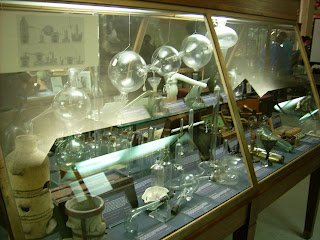
<a href="http://www.mhs.ox.ac.uk/">Museum of the History of Science</a>, with some nice chemical pieces, like this one:</p>

<p><img src="/assets/images/DSCI0089.JPG" alt="" /></p>

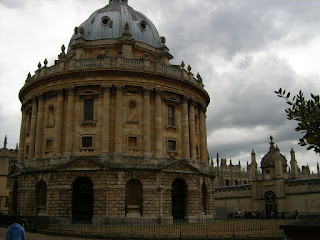
<p>Buildings like the <a href="http://en.wikipedia.org/wiki/Radcliffe_Camera">Radcliffe Camera</a> are nice on the outside, but closed.
Seems I have to become a fellow first. This is what it looked like today:</p>

<p><img src="/assets/images/DSCI0094.JPG" alt="" /></p>

<p>Quite interesting too was the Oxford University Press shop. I’m a sucker for books. Apparently, you can just write a book
and publish it. For example, an extensive list of <a href="http://ukcatalogue.oup.com/category/academic/series/general/opr.do">dictionaries on about anything</a>…
and since I have been writing several book chapters right now, perhaps this is actually an interesting route…</p>

<p>But the question is, of course, how long will we keep reading books… they’re the
<a href="https://blogs.ch.cam.ac.uk/pmr/2008/04/29/why-pdf-is-a-hamburger/">hamburgers <i class="fa-solid fa-recycle fa-xs"></i></a> of educational material… Kindle and alikes will soon drop in
price, and cost some €30 euro. But e-book prices will have to drop too, and I still do not get why an e-book is more expensive than a paperback…
(see <a href="http://chem-bla-ics.blogspot.com/2010/07/amazon-kindle-edition-is-more-expensive.html">Amazon, the Kindle edition is more expensive than the paperback??</a>).
But then again… they are rich, and I am not.</p>

<p>There was some recent talk about the fact that no one can be Open to the full. You either do Open Data or Open Source, and
make a living from the rest. That’s where I nicely show I know bullocks of economics. I do
<a href="http://bodr.sf.net/">BODR</a>, <a href="http://cdk.sf.net/">CDK</a>, … all Open, all for free.</p>

<p>OK. That’s a plus for Oxford… it makes you think about things. Perhaps there is something to
<a href="http://en.wikipedia.org/wiki/Morphic_field#Morphogenetic_field">morphogenetic</a> fields…</p>]]></content><author><name>Egon Willighagen</name></author><category term="oxford" /><category term="oxfordadmet2010" /><category term="publishing" /><category term="science" /><category term="toxicology" /><category term="conference" /><summary type="html"><![CDATA[Yesterday I arrived in Oxford, after a 3.5 hour bus transfer from London Stansted. Long, boring ride (though I might have seen a few red kites , but seeing that they were near extinct, I am wondering what other large bird of prey has strong split tail like a swallow). Showed once more that the UK infrastructure has hardly changed since the 19th century. Enjoying an undergraduate room at one of the colleges. Pretty basic, but makes me feel more like a human than a tourist. Yes!, undergraduate students are human too! One of the advantages is you get an excellent internet connection :)]]></summary></entry><entry><title type="html">Oxford, August 2010: eCheminfo Predictive ADME &amp;amp; Toxicology 2010 Workshop</title><link href="https://chem-bla-ics.linkedchemistry.info/2010/03/22/oxford-august-2010-echeminfo-predictive.html" rel="alternate" type="text/html" title="Oxford, August 2010: eCheminfo Predictive ADME &amp;amp; Toxicology 2010 Workshop" /><published>2010-03-22T00:00:00+00:00</published><updated>2010-03-22T00:00:00+00:00</updated><id>https://chem-bla-ics.linkedchemistry.info/2010/03/22/oxford-august-2010-echeminfo-predictive</id><content type="html" xml:base="https://chem-bla-ics.linkedchemistry.info/2010/03/22/oxford-august-2010-echeminfo-predictive.html"><![CDATA[<p>The first week of August I will attend the <a href="http://echeminfo.com/COMTY_oxfordadmet10">eCheminfo Predictive ADME &amp; Toxicology Workshop</a>
(<a href="http://events.linkedin.com/eCheminfo-Predictive-ADME-Toxicology/pub/271590">LinkedIn Event</a>) for which I received a
<a href="http://barryhardy.blogs.com/cheminfostream/2010/02/bursary-award-applications-echeminfo-oxford-2010-workshops.html">Bursary Award</a>.
It will be my first time in Oxford, and I am very much looking forward to it!</p>

<p>The meeting is also bound to be fun. I have not done much in the area of toxicology other than the more general QSAR/QSPR model
building with chemometrics. But I have been recently taking to Nina and other of the <a href="http://www.opentox.org/">OpenTox</a> community,
and started to play a bit with the data and computation API they are developing.</p>

<p><img src="/assets/images/bioclipseOpenTox.png" alt="" /></p>

<p>I started a Bioclipse plugin recently (see screenshot), and placed the source code in <a href="http://gitorious.org/bioclipse-opentox/bioclipse-opentox">this bioclipse-opentox</a>
Git repository on <a href="http://gitorious.org/">Gitorious</a> (<a href="http://github.com/egonw">my GitHub account</a> is already over the formal limit).
The functionality is still quite limited, and the manager currently only provides methods to download data sets
(<a href="http://www.myexperiment.org/workflows/1192">myexperiment:1192</a>):</p>

<div class="language-javascript highlighter-rouge"><div class="highlight"><pre class="highlight"><code><span class="c1">// query a service using the OpenTox API 1.1</span>
<span class="c1">// See: http://www.opentox.org/dev/apis/api-1.1</span>

<span class="kd">var</span> <span class="nx">service</span> <span class="o">=</span> <span class="dl">"</span><span class="s2">http://apps.ideaconsult.net:8180/ambit2/</span><span class="dl">"</span><span class="p">;</span>

<span class="kd">var</span> <span class="nx">datasets</span> <span class="o">=</span> <span class="nx">opentox</span><span class="p">.</span><span class="nf">listDataSets</span><span class="p">(</span><span class="nx">service</span><span class="p">);</span>
<span class="k">for </span><span class="p">(</span><span class="kd">set</span><span class="o">=</span><span class="mi">0</span><span class="p">;</span> <span class="kd">set</span><span class="o">&lt;</span><span class="nx">datasets</span><span class="p">.</span><span class="nf">size</span><span class="p">();</span> <span class="kd">set</span><span class="o">++</span><span class="p">)</span> <span class="p">{</span>
  <span class="kd">var</span> <span class="nx">dataset</span> <span class="o">=</span> <span class="nx">datasets</span><span class="p">.</span><span class="nf">get</span><span class="p">(</span><span class="kd">set</span><span class="p">);</span>
  <span class="nx">js</span><span class="p">.</span><span class="nf">say</span><span class="p">(</span><span class="dl">"</span><span class="s2">Downloading set: </span><span class="dl">"</span> <span class="o">+</span> <span class="nx">dataset</span><span class="p">);</span>
  <span class="nx">ui</span><span class="p">.</span><span class="nf">open</span><span class="p">(</span>
    <span class="nx">opentox</span><span class="p">.</span><span class="nf">downloadDataSetAsMDLSDfile</span><span class="p">(</span>
       <span class="nx">service</span><span class="p">,</span> <span class="nx">dataset</span><span class="p">,</span> <span class="dl">"</span><span class="s2">/OpenTox/ambit</span><span class="dl">"</span> <span class="o">+</span> <span class="nx">dataset</span> <span class="o">+</span> <span class="dl">"</span><span class="s2">.sdf</span><span class="dl">"</span>
    <span class="p">)</span>
  <span class="p">)</span>
<span class="p">}</span>
</code></pre></div></div>

<p>Behind this plugin is again the RDF plugin, as OpenTox uses RDF too, a few simple SPARQL queries was all that needed to be defined.
And <a href="http://chem-bla-ics.blogspot.com/2010/03/rdf-powered-qsar-wizard-sparql-end.html">again</a>, the Bioclipse pluigin
code base is pretty small.</p>]]></content><author><name>Egon Willighagen</name></author><category term="bioclipse" /><category term="qsar" /><category term="toxicology" /><category term="opentox" /><category term="ambit" /><summary type="html"><![CDATA[The first week of August I will attend the eCheminfo Predictive ADME &amp; Toxicology Workshop (LinkedIn Event) for which I received a Bursary Award. It will be my first time in Oxford, and I am very much looking forward to it!]]></summary><media:thumbnail xmlns:media="http://search.yahoo.com/mrss/" url="https://chem-bla-ics.linkedchemistry.info/assets/images/bioclipseOpenTox.png" /><media:content medium="image" url="https://chem-bla-ics.linkedchemistry.info/assets/images/bioclipseOpenTox.png" xmlns:media="http://search.yahoo.com/mrss/" /></entry></feed>