<?xml version="1.0" encoding="utf-8"?><feed xmlns="http://www.w3.org/2005/Atom" ><generator uri="https://jekyllrb.com/" version="4.3.4">Jekyll</generator><link href="https://chem-bla-ics.linkedchemistry.info/feed/by_tag/nanocommons.xml" rel="self" type="application/atom+xml" /><link href="https://chem-bla-ics.linkedchemistry.info/" rel="alternate" type="text/html" /><updated>2026-04-11T11:30:50+00:00</updated><id>https://chem-bla-ics.linkedchemistry.info/feed/by_tag/nanocommons.xml</id><title type="html">chem-bla-ics</title><subtitle>Chemblaics (pronounced chem-bla-ics) is the science that uses open science and computers to solve problems in chemistry, biochemistry and related fields.</subtitle><author><name>Egon Willighagen</name></author><entry><title type="html">INTOXICOM Workshop #4: Training Materials for Toxicology</title><link href="https://chem-bla-ics.linkedchemistry.info/2025/05/12/intoxicom-training-material-collection.html" rel="alternate" type="text/html" title="INTOXICOM Workshop #4: Training Materials for Toxicology" /><published>2025-05-12T00:00:00+00:00</published><updated>2025-05-12T00:00:00+00:00</updated><id>https://chem-bla-ics.linkedchemistry.info/2025/05/12/intoxicom-training-material-collection</id><content type="html" xml:base="https://chem-bla-ics.linkedchemistry.info/2025/05/12/intoxicom-training-material-collection.html"><![CDATA[<p>INTOXICOM is an ELIXIR Toxicoloy Community (doi:<a href="https://doi.org/10.12688/f1000research.74502.2">10.12688/f1000research.74502.2</a>)
implementation study, organizing five workshops, each
one with a different topic. The first three workshops were in Utrecht
(doi:<a href="https://doi.org/10.37044/osf.io/un2rw">10.37044/osf.io/un2rw</a>), Basel, and Uppsala.
The <a href="https://www.aanmelder.nl/intoxicom-ws-2/wiki/1152037/wp-4-features-ws-4">fourth workshop</a>
has the theme <em>training material</em> and will be held in Birmingham (thanks
<a href="https://www.linkedin.com/in/iseult-lynch-b5856910/">Iseult</a>!). And one aspect of that is to make
existing training material from toxicology projects indexed and therefore more FAIR.</p>

<p>Last week we had a telcon, and I promised to make an overview of some open educational resources
that I have (co-)developed over the years. It started during the eNanoMapper project, where
our Project Technical Adviser was Dr. <a href="https://orcid.org/0000-0003-1461-0988">Cedric Notredame</a>.
He commented on us using Word documents for training materials, and that was for me a cue to
<a href="https://github.com/enanomapper/tutorials/commit/5ca03a94a3bd3b60dbb6e080f05cb9faca7eaf69">start using</a>
GitHub Pages instead. We later reused this for NanoCommons, and by then GitHub Pages had
become common and the foundation for other online material for toxicology projects.</p>

<p>Here follows an overview of tutorials I contributed to. Some are already registered
with TeSS, but I am sure I will learn a lot of new tricks, and particularly about the
learning paths.</p>

<p>Hope to see you there! Register <a href="https://www.aanmelder.nl/intoxicom-ws-2/wiki/1152037/wp-4-features-ws-4">here</a>.</p>

<h2 id="enanomapper">eNanoMapper</h2>

<ul>
  <li><a href="https://enanomapper.github.io/tutorials/BrowseOntology/Tutorial%20browsing%20eNM%20ontology.html">Browsing the eNanoMapper ontology with BioPortal, AberOWL and Protégé</a></li>
  <li><a href="https://enanomapper.github.io/tutorials/Entering_and_analysing_nano_safety_data/readme.html">Entering and analysing nano safety data</a></li>
  <li><a href="https://enanomapper.github.io/tutorials/Added%20ontology%20terms/README.html">Adding ontology terms</a></li>
  <li><a href="https://enanomapper.github.io/tutorials/Pathway_analysis/Pathway%20analysis.html">How to use the Pathway module of ArrayAnalysis.org for pathway analysis of microarray data</a></li>
  <li><a href="https://enanomapper.github.io/tutorials/Pathway/readme.html">How to make a pathway</a></li>
</ul>

<p>By other eNanoMapper partners:</p>

<ul>
  <li><a href="https://enanomapper.github.io/tutorials/Omics%20descriptors%20calculation/Omics%20descriptors%20calculation%20R%20package.html">Omics descriptors calculation</a> (by Georgia Tsiliki and Haralambos Sarimveis)</li>
</ul>

<h2 id="nanocommons">NanoCommons</h2>

<ul>
  <li><a href="https://nanocommons.github.io/tutorials/enteringData/">Adding nanomaterial data</a></li>
  <li><a href="https://nanocommons.github.io/user-handbook/FAIRification/ten-simple-actions/">Ten simple actions to make NSC Research Output more Findable</a></li>
</ul>

<p>By group members:</p>

<ul>
  <li><a href="https://nanocommons.github.io/tutorials/eNanoMapper/">Adding new term to the eNanoMapper ontology</a> (by Laurent Winckers)</li>
  <li><a href="https://nanocommons.github.io/user-handbook/">NanoCommons User Guidance Handbook</a> (by Thomas Exner, with contributions by many)</li>
</ul>

<h2 id="fairplus">FAIRplus</h2>

<p>I add this one as well, as this below recipes were developed for the eTox use case.</p>

<ul>
  <li><a href="https://w3id.org/faircookbook/FCB007">InChI and SMILES identifiers for chemical structures</a></li>
  <li><a href="https://w3id.org/faircookbook/FCB080">Creating InChIKeys for IUPAC names</a></li>
</ul>

<h2 id="vhp4safety">VHP4Safety</h2>

<ul>
  <li><a href="https://docs.vhp4safety.nl/en/latest/tutorials/cheminfo/intro.html">Information about chemicals</a></li>
</ul>

<p>Many more are listed on the <a href="https://docs.vhp4safety.nl/e">VHP4Safety Docs</a> website.</p>]]></content><author><name>Egon Willighagen</name></author><category term="enanomapper" /><category term="nanocommons" /><category term="elixir" /><category term="cito:citesAsRecommendedReading:10.12688/f1000research.74502.2" /><category term="cito:citesAsRecommendedReading:10.37044/osf.io/un2rw" /><summary type="html"><![CDATA[INTOXICOM is an ELIXIR Toxicoloy Community (doi:10.12688/f1000research.74502.2) implementation study, organizing five workshops, each one with a different topic. The first three workshops were in Utrecht (doi:10.37044/osf.io/un2rw), Basel, and Uppsala. The fourth workshop has the theme training material and will be held in Birmingham (thanks Iseult!). And one aspect of that is to make existing training material from toxicology projects indexed and therefore more FAIR.]]></summary></entry><entry><title type="html">Reusing data: two new papers</title><link href="https://chem-bla-ics.linkedchemistry.info/2024/03/17/two-papers.html" rel="alternate" type="text/html" title="Reusing data: two new papers" /><published>2024-03-17T00:00:00+00:00</published><updated>2024-03-17T00:00:00+00:00</updated><id>https://chem-bla-ics.linkedchemistry.info/2024/03/17/two-papers</id><content type="html" xml:base="https://chem-bla-ics.linkedchemistry.info/2024/03/17/two-papers.html"><![CDATA[<p>My research is about the interaction of (machine) representation and the impact on the success of
data analysis (matchine learning, chemometrics, AI, etc). See the posts
<a href="https://chem-bla-ics.linkedchemistry.info/2010/08/09/molecular-chemometrics-principles-1.html">about</a>
<a href="https://chem-bla-ics.linkedchemistry.info/2010/08/12/molecular-chemometrics-principles-2-be.html">molecular</a>
<a href="https://chem-bla-ics.linkedchemistry.info/2010/08/14/molecular-chemometrics-principles-3.html">chemometrics</a>.
This got me into <a href="https://chem-bla-ics.linkedchemistry.info/tag/fair">FAIR</a>: making data interoperable
and being able to (really) reuse data is the starting point of doing research.</p>

<p>So, when I get the chance to see something where I worked on to make more FAIR actually being used,
I love to push the boundaries of FAIR a bit extra. The study of representation of molecules and molecular
systems is not quite a popular science, but I find it important. Two new papers got recently published
to which I contributed from this perspective.</p>

<p>The first paper by Anna Niarakis <i>et al.</i> is about using the SARS-CoV-2/COVID-19 knowledge base we
have collected of the past 4 years (doi:<a href="https://doi.org/10.3389/fimmu.2023.1282859">10.3389/fimmu.2023.1282859</a>).
For me, this started with a WikiPathways with early knowledge about the virus proteins. I think
in this and earlier papers, we improved our open science and bioinformatics and are actually
more ready for a next pandemic, which inevitably will come.</p>

<p>The second paper by Alfaro Serrano <i>et al.</i> is about how access to data remains key to many
things, and this, obviously, includes the Sustainable Development Goals (SDGs)
(doi:<a href="https://doi.org/10.1039/D3SU00148B">10.1039/D3SU00148B</a>). When it comes down
to the face/off of FAIR versus Open, I think Open has more impact, hands-down.</p>

<p>About the latter, I recently wrote up ten simple actions you can take to make your
nanosafety research output more FAIR (doi:<a href="https://doi.org/10.5281/zenodo.10533126">10.5281/zenodo.10533126</a>).</p>]]></content><author><name>Egon Willighagen</name></author><category term="covid19" /><category term="fair" /><category term="nanosafety" /><category term="nanocommons" /><category term="doi:10.3389/FIMMU.2023.1282859" /><category term="doi:10.1039/D3SU00148B" /><category term="doi:10.5281/ZENODO.10533126" /><summary type="html"><![CDATA[My research is about the interaction of (machine) representation and the impact on the success of data analysis (matchine learning, chemometrics, AI, etc). See the posts about molecular chemometrics. This got me into FAIR: making data interoperable and being able to (really) reuse data is the starting point of doing research.]]></summary></entry><entry><title type="html">New paper: “Integration among databases and data sets to support productive nanotechnology: Challenges and recommendations”</title><link href="https://chem-bla-ics.linkedchemistry.info/2017/12/15/new-paper-integration-among-databases.html" rel="alternate" type="text/html" title="New paper: “Integration among databases and data sets to support productive nanotechnology: Challenges and recommendations”" /><published>2017-12-15T00:00:00+00:00</published><updated>2017-12-15T00:00:00+00:00</updated><id>https://chem-bla-ics.linkedchemistry.info/2017/12/15/new-paper-integration-among-databases</id><content type="html" xml:base="https://chem-bla-ics.linkedchemistry.info/2017/12/15/new-paper-integration-among-databases.html"><![CDATA[<p><img style="float: right;" src="/assets/images/1-s2.0-S2452074817301398-gr1.png" width="200" alt="Figure 1 from the NanoImpact article. CC-BY." />
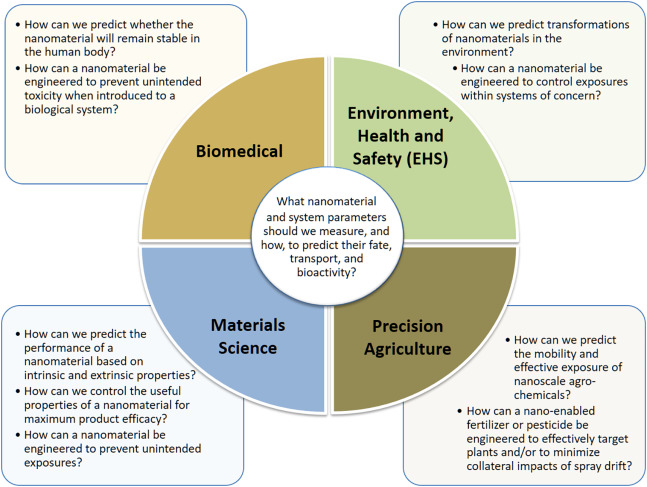
The U.S.A and European nanosafety communities have a longstanding history of collaboration. On both sides there are working groups,
<a href="https://nciphub.org/groups/nanowg">NanoWG</a> and <a href="https://www.nanosafetycluster.eu/working-groups/wg-f-data-management.html">WG-F</a> (previously called
WG4) of the NanoSafety Cluster. I have been chair of WG4 for about three years and still active in the group, though in the past half year, without
dedicated funding, less active. That is already changing again with the imminent start of the
<a href="https://twitter.com/iseult5/status/836879814581698560">NanoCommons</a> project.</p>

<p>One of these collaborations resulted in a series of papers around data curation (see
doi:<a href="https://doi.org/10.1039/C5NR08944A">10.1039/C5NR08944A</a> and
doi:<a href="https://doi.org/10.3762/bjnano.6.189">10.3762/bjnano.6.189</a>). Part of this effort was also an survey about the state of databases. A good
number of databases responded to the call. It turned out non-trivial to analyse the results and write up a report around it with recommendations.
The first version was submitted and rejected, and with fresh leadership, the paper underwent a significant restructuring by
<a href="http://www.codata.org/events/codata-prize/2006-john-rumble-usa">John Rumble</a> and resubmitted to Elsevier’s
<a href="http://www.sciencedirect.com/science/journal/24520748">NanoImpact</a> and now online
(doi:<a href="http://dx.doi.org/10.1016/j.impact.2017.11.002">10.1016/j.impact.2017.11.002</a>).</p>

<p>The paper outlines an overview of challenges and a recommendation to the community on how to proceed. That is, basically, how should projects
like <a href="https://search.data.enanomapper.net/">eNanoMapper</a>, <a href="https://cananolab.nci.nih.gov/caNanoLab/">caNanoLab</a>, and
<a href="https://www.nanomaterialregistry.org/">Nanomaterial Registry</a> evolve to, and what might the
<a href="https://echa.europa.eu/-/eu-observatory-for-nanomaterials-launched">European Union Observatory for Nanomaterials</a> (EUON) look like. BTW, a
similar paper by Tropsha et al. was recently published the other week with a focus on the USA database ecosystem
(doi:<a href="https://doi.org/10.1038/nnano.2017.233">10.1038/nnano.2017.233</a>).</p>

<p>Have fun reading <a href="https://doi.org/10.1016/j.impact.2017.11.002">it</a>, and if you are working in a related field, please join
either of the two aforementioned working groups! And a huge thanks to everyone involved, particular Sandra, John, and Christine.</p>]]></content><author><name>Egon Willighagen</name></author><category term="nanosafety" /><category term="justdoi:10.1039/C5NR08944A" /><category term="justdoi:10.3762/bjnano.6.189" /><category term="doi:10.1016/J.IMPACT.2017.11.002" /><category term="justdoi:10.1038/nnano.2017.233" /><category term="enanomapper" /><category term="nanocommons" /><category term="eunsc" /><summary type="html"><![CDATA[The U.S.A and European nanosafety communities have a longstanding history of collaboration. On both sides there are working groups, NanoWG and WG-F (previously called WG4) of the NanoSafety Cluster. I have been chair of WG4 for about three years and still active in the group, though in the past half year, without dedicated funding, less active. That is already changing again with the imminent start of the NanoCommons project.]]></summary><media:thumbnail xmlns:media="http://search.yahoo.com/mrss/" url="https://chem-bla-ics.linkedchemistry.info/assets/images/1-s2.0-S2452074817301398-gr1.png" /><media:content medium="image" url="https://chem-bla-ics.linkedchemistry.info/assets/images/1-s2.0-S2452074817301398-gr1.png" xmlns:media="http://search.yahoo.com/mrss/" /></entry></feed>