<?xml version="1.0" encoding="utf-8"?><feed xmlns="http://www.w3.org/2005/Atom" ><generator uri="https://jekyllrb.com/" version="4.3.4">Jekyll</generator><link href="https://chem-bla-ics.linkedchemistry.info/feed/by_tag/acs.xml" rel="self" type="application/atom+xml" /><link href="https://chem-bla-ics.linkedchemistry.info/" rel="alternate" type="text/html" /><updated>2026-02-28T20:19:43+00:00</updated><id>https://chem-bla-ics.linkedchemistry.info/feed/by_tag/acs.xml</id><title type="html">chem-bla-ics</title><subtitle>Chemblaics (pronounced chem-bla-ics) is the science that uses open science and computers to solve problems in chemistry, biochemistry and related fields.</subtitle><author><name>Egon Willighagen</name></author><entry><title type="html">American Chemical Society Fall 2023 meeting</title><link href="https://chem-bla-ics.linkedchemistry.info/2023/09/09/ACSFall2023.html" rel="alternate" type="text/html" title="American Chemical Society Fall 2023 meeting" /><published>2023-09-09T00:00:00+00:00</published><updated>2023-09-09T00:00:00+00:00</updated><id>https://chem-bla-ics.linkedchemistry.info/2023/09/09/ACSFall2023</id><content type="html" xml:base="https://chem-bla-ics.linkedchemistry.info/2023/09/09/ACSFall2023.html"><![CDATA[<p>About four weeks ago the <a href="https://www.acs.org/meetings/acs-meetings/fall-2023.html">Fall 2023 American Chemical Society</a>
meeting (<a href="https://mastodon.social/tags/ACSFall2023">#ACSFall2023</a>).
I have attended a few ACS meetings in person and even organized a <a href="https://egonw.github.io/acsrdf2010/">symposium at the 2010 ACS meeting</a>
in Boston. This time too, I did not participate in person, tho visiting San Francisco again would have been nice. I gave
<a href="https://mastodon.social/@egonw@social.edu.nl/110882509829434765">two</a> <a href="https://mastodon.social/@egonw@social.edu.nl/110883271752255923">presentations</a>
(slides doi:<a href="https://doi.org/10.5281/zenodo.8255394">10.5281/zenodo.8255394</a>), but have not uploaded my slides of the first presentation to Zenodo yet.</p>

<p>The theme of the meeting was data, and this resulted in a wealth of presentations with cheminformatics. What is striking
here is that a lot of work has not changed so much in 20 years, except for the scale. What I missed here was the large open
data sets, but generally the level of open science was heartwarming! So many preprints mentions, GitHub repositories, and Zenodo
deposits. The Blue Obelisk was truly ahead of its time, but it is a delight to see the field of chemistry catch up.
I can now say a lot of about peer review, and why the field is not benefitting from all the experience that exists in the field
because people publish in the wrong journals, but that is for another time.</p>

<p>I attended multiple sessions, which is a bit of a challenge, doing this remotely from Central European Summer Time (CEST).
Of course, the Sunday started with the <a href="https://acs.digitellinc.com/sessions/574129/view">Chemical informatics (R)evolution: Towards Democratization and Open Science</a>
session, where I had my first talk, and later that day the <a href="https://acs.digitellinc.com/sessions/573932/view">Enhance your Data - Smart Ways to Metadata and Knowledge Graphs</a> session,
where I gave a second talk, about <a href="https://bioschemas.org/">Bioschemas</a>’ <code class="language-plaintext highlighter-rouge">ChemicalSubstance</code> and <code class="language-plaintext highlighter-rouge">MolecularEntity</code>. Sadly, I
had to leave that meeting early because it was getting too late.</p>

<p>There were so many interesting sessions, I could not attend everything. I also have to go back to all
<a href="https://mastodon.social/tags/ACSFall2023">my notes</a> and isolate things I want to follow up on, prominently open datasets.</p>

<p>More later.</p>]]></content><author><name>Egon Willighagen</name></author><category term="acs" /><category term="scholia" /><category term="wikidata" /><category term="justdoi:10.5281/zenodo.8255394" /><category term="acsfall2023" /><category term="conference" /><summary type="html"><![CDATA[About four weeks ago the Fall 2023 American Chemical Society meeting (#ACSFall2023). I have attended a few ACS meetings in person and even organized a symposium at the 2010 ACS meeting in Boston. This time too, I did not participate in person, tho visiting San Francisco again would have been nice. I gave two presentations (slides doi:10.5281/zenodo.8255394), but have not uploaded my slides of the first presentation to Zenodo yet.]]></summary></entry><entry><title type="html">Join me in encouraging the ACS to join the Initiative for Open Citations</title><link href="https://chem-bla-ics.linkedchemistry.info/2018/11/17/join-me-in-encouraging-acs-to-join.html" rel="alternate" type="text/html" title="Join me in encouraging the ACS to join the Initiative for Open Citations" /><published>2018-11-17T00:00:00+00:00</published><updated>2018-11-17T00:00:00+00:00</updated><id>https://chem-bla-ics.linkedchemistry.info/2018/11/17/join-me-in-encouraging-acs-to-join</id><content type="html" xml:base="https://chem-bla-ics.linkedchemistry.info/2018/11/17/join-me-in-encouraging-acs-to-join.html"><![CDATA[<p>My research is into abstract representation of chemical information, important for other research to be performed. Indeed, my work
is generally reused, but knowing which research fields my work is used in, or which societal problems it is helping solve, is not
easily retrieved or determined. Efforts like <a href="https://meta.wikimedia.org/wiki/WikiCite">WikiCite</a> and
<a href="https://tools.wmflabs.org/scholia/topic/Q45340488">Scholia</a> do allow me to navigate the citation network, so that I can determine
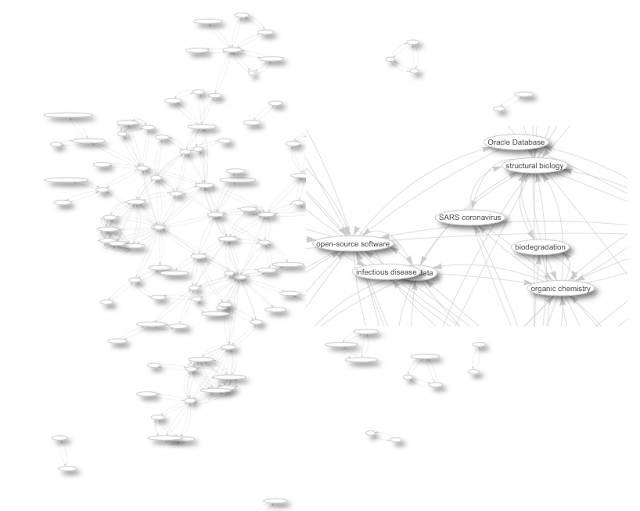
which research fields my output influences and which diseases are studied with methods I proposed. Here’s a
<a href="https://query.wikidata.org/embed.html#%23defaultView%3AGraph%0ASELECT%0A%20%20%3Ftopic1%20%3Ftopic1Label%20%3Ftopic2%20%3Ftopic2Label%20%3Fcount%0AWITH%20%7B%0A%20%20SELECT%0A%20%20%20%20(COUNT(%3Fwork)%20AS%20%3Fcount)%20%3Ftopic1%20%3Ftopic2%0A%20%20WHERE%20%7B%0A%20%20%20%20%23%20Find%20works%20that%20are%20marked%20with%20main%20subject%20of%20the%20topic.%0A%20%20%20%20%3Fwork%20wdt%3AP2860%2Fwdt%3AP50%20wd%3AQ20895241%20.%0A%20%20%20%20%0A%20%20%20%20%23%20Identify%20co-occuring%20topics.%20%0A%20%20%20%20%3Fwork%20wdt%3AP921%20%3Ftopic1%2C%20%3Ftopic2%20.%20%0A%0A%20%20%20%20%23%20article%20by%20author%0A%20%20%20%20MINUS%20%7B%20%3Fwork%20wdt%3AP50%20wd%3AQ20895241%20.%20%7D%0A%20%20%20%20FILTER%20(%20%3Ftopic1%20!%3D%20%3Ftopic2%20)%0A%20%20%7D%0A%20%20GROUP%20BY%20%3Ftopic1%20%3Ftopic2%0A%20%20ORDER%20BY%20DESC(%3Fcount)%0A%0A%20%20%23%20There%20a%20performance%20problems%20in%20the%20browser%3A%20We%20cannot%20show%20large%20graphs%2C%0A%20%20%23%20so%20we%20put%20a%20limit%20on%20the%20number%20of%20links%20displayed.%0A%20%20LIMIT%20400%0A%0A%7D%20AS%20%25results%0AWHERE%20%7B%0A%20%20INCLUDE%20%25results%0A%20%20%0A%20%20%23%20Label%20the%20results%0A%20%20SERVICE%20wikibase%3Alabel%20%7B%0A%20%20%20%20bd%3AserviceParam%20wikibase%3Alanguage%20%22en%2Cda%2Cde%2Ces%2Cfr%2Cjp%2Cnl%2Cno%2Cru%2Csv%2Czh%22.%0A%20%20%7D%0A%7D%0A%0A">network of topics of articles citing my work</a>:</p>

<p><img src="/assets/images/exploring.png" alt="" /></p>

<p>Graphs like this show information on how people are using my work, which in turn allows me to further support. But this relies on
open citations.</p>

<p>In my opinion, citations are an essential part of our research process. It gives us access to import prior work on which a study
is based, and reflects how a work influences other research or even is essential to that other work. For example, it allows us
to not repeat earlier published work, while preserving the ability to reproduce the full work. The
<a href="https://i4oc.org/">Initiative for Open Citations</a> encourages these citations to be publicly available to benefit research, but
removing barriers to access this critical part of scholarly communication. While many societies and publishers have joined this
initiative, the <a href="https://pubs.acs.org/">American Chemical Society</a> (ACS) has not yet. By not joining the limit the sharing of
knowledge for unclear reasons.</p>

<p>And I would really like to see the ACS to join this initiative, and proposed this a few times already. Because they still have
not joined the initiative, I have <a href="https://www.change.org/p/the-american-chemical-society-to-join-the-initiative-for-open-citations">started this petition</a>.
If you agree, please sign and share it with others.</p>]]></content><author><name>Egon Willighagen</name></author><category term="acs" /><category term="i4oc" /><category term="publishing" /><summary type="html"><![CDATA[My research is into abstract representation of chemical information, important for other research to be performed. Indeed, my work is generally reused, but knowing which research fields my work is used in, or which societal problems it is helping solve, is not easily retrieved or determined. Efforts like WikiCite and Scholia do allow me to navigate the citation network, so that I can determine which research fields my output influences and which diseases are studied with methods I proposed. Here’s a network of topics of articles citing my work:]]></summary><media:thumbnail xmlns:media="http://search.yahoo.com/mrss/" url="https://chem-bla-ics.linkedchemistry.info/assets/images/exploring.png" /><media:content medium="image" url="https://chem-bla-ics.linkedchemistry.info/assets/images/exploring.png" xmlns:media="http://search.yahoo.com/mrss/" /></entry><entry><title type="html">Adding disclosures to Wikidata with Bioclipse</title><link href="https://chem-bla-ics.linkedchemistry.info/2016/03/20/adding-disclosures-to-wikidata-with.html" rel="alternate" type="text/html" title="Adding disclosures to Wikidata with Bioclipse" /><published>2016-03-20T00:00:00+00:00</published><updated>2016-03-20T00:00:00+00:00</updated><id>https://chem-bla-ics.linkedchemistry.info/2016/03/20/adding-disclosures-to-wikidata-with</id><content type="html" xml:base="https://chem-bla-ics.linkedchemistry.info/2016/03/20/adding-disclosures-to-wikidata-with.html"><![CDATA[<p>Last week the huge, bi-annual ACS meeting took place (<a href="https://twitter.com/search?q=%23ACSSanDiego">#ACSSanDiego</a>),
during which commonly new drug (leads) are disclosed. This time too, like this one tweeted by
<a href="https://twitter.com/beth_halford">Bethany Halford</a>:</p>

<iframe id="twitter-widget-3" scrolling="no" frameborder="0" allowtransparency="true" allowfullscreen="true" class="" title="X Post" src="https://platform.twitter.com/embed/Tweet.html?dnt=false&amp;embedId=twitter-widget-3&amp;features=eyJ0ZndfdGltZWxpbmVfbGlzdCI6eyJidWNrZXQiOltdLCJ2ZXJzaW9uIjpudWxsfSwidGZ3X2ZvbGxvd2VyX2NvdW50X3N1bnNldCI6eyJidWNrZXQiOnRydWUsInZlcnNpb24iOm51bGx9LCJ0ZndfdHdlZXRfZWRpdF9iYWNrZW5kIjp7ImJ1Y2tldCI6Im9uIiwidmVyc2lvbiI6bnVsbH0sInRmd19yZWZzcmNfc2Vzc2lvbiI6eyJidWNrZXQiOiJvbiIsInZlcnNpb24iOm51bGx9LCJ0ZndfZm9zbnJfc29mdF9pbnRlcnZlbnRpb25zX2VuYWJsZWQiOnsiYnVja2V0Ijoib24iLCJ2ZXJzaW9uIjpudWxsfSwidGZ3X21peGVkX21lZGlhXzE1ODk3Ijp7ImJ1Y2tldCI6InRyZWF0bWVudCIsInZlcnNpb24iOm51bGx9LCJ0ZndfZXhwZXJpbWVudHNfY29va2llX2V4cGlyYXRpb24iOnsiYnVja2V0IjoxMjA5NjAwLCJ2ZXJzaW9uIjpudWxsfSwidGZ3X3Nob3dfYmlyZHdhdGNoX3Bpdm90c19lbmFibGVkIjp7ImJ1Y2tldCI6Im9uIiwidmVyc2lvbiI6bnVsbH0sInRmd19kdXBsaWNhdGVfc2NyaWJlc190b19zZXR0aW5ncyI6eyJidWNrZXQiOiJvbiIsInZlcnNpb24iOm51bGx9LCJ0ZndfdXNlX3Byb2ZpbGVfaW1hZ2Vfc2hhcGVfZW5hYmxlZCI6eyJidWNrZXQiOiJvbiIsInZlcnNpb24iOm51bGx9LCJ0ZndfdmlkZW9faGxzX2R5bmFtaWNfbWFuaWZlc3RzXzE1MDgyIjp7ImJ1Y2tldCI6InRydWVfYml0cmF0ZSIsInZlcnNpb24iOm51bGx9LCJ0ZndfbGVnYWN5X3RpbWVsaW5lX3N1bnNldCI6eyJidWNrZXQiOnRydWUsInZlcnNpb24iOm51bGx9LCJ0ZndfdHdlZXRfZWRpdF9mcm9udGVuZCI6eyJidWNrZXQiOiJvbiIsInZlcnNpb24iOm51bGx9fQ%3D%3D&amp;frame=false&amp;hideCard=false&amp;hideThread=false&amp;id=710543705812426752&amp;lang=en&amp;origin=https%3A%2F%2Fchem-bla-ics.blogspot.com%2F2016%2F03%2Fadding-disclosures-to-wikidata-with.html&amp;sessionId=ba8a9ed10d55387ac0f656bfaf73f3a579e1e77a&amp;theme=light&amp;widgetsVersion=2615f7e52b7e0%3A1702314776716&amp;width=550px" style="position: static; visibility: visible; width: 550px; height: 1311px; display: block; flex-grow: 1;" data-tweet-id="710543705812426752"></iframe>
<p><br /></p>

<p>Because getting this information out in the open is important, I think it’s a good idea to add them to
<a href="http://wikidata.org/">Wikidata</a> (see doi:<a href="http://dx.doi.org/10.3897/rio.1.e7573">10.3897/rio.1.e7573</a>).
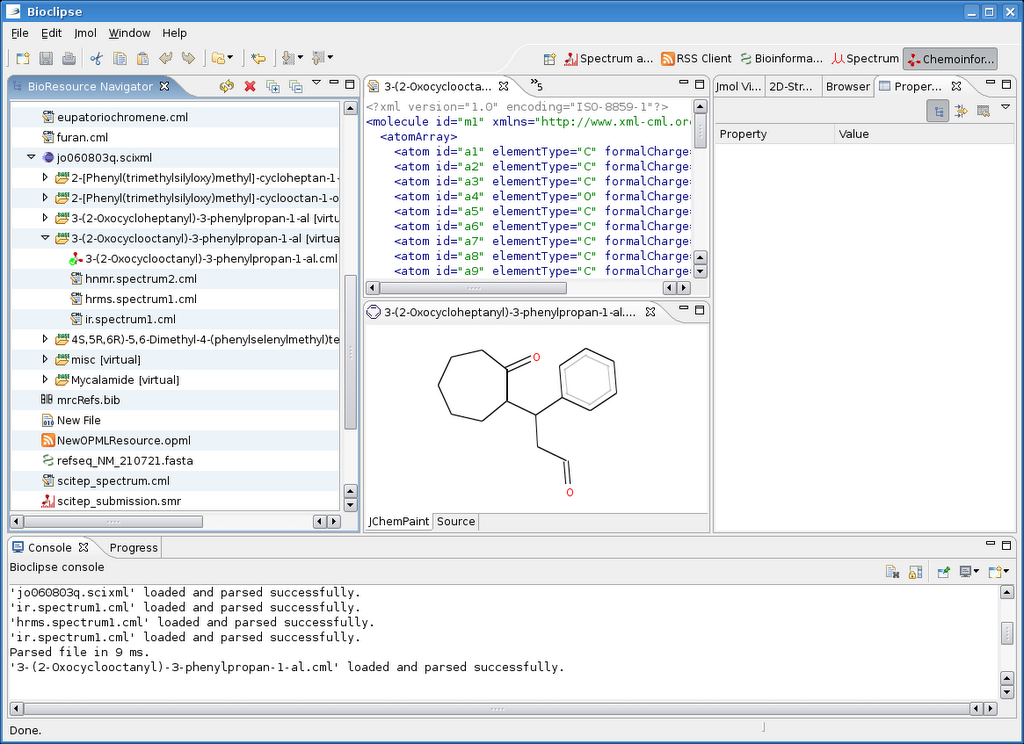
So, with <a href="http://www.bioclipse.net/">Bioclipse</a> (doi:<a href="http://dx.doi.org/10.1186/1471-2105-8-59">10.1186/1471-2105-8-59</a>)
I redrew the structure:</p>

<p><img src="/assets/images/strucutre.png" alt="" /></p>

<p>I previously blogged about how to <a href="https://chem-bla-ics.linkedchemistry.info/2016/01/27/adding-chemical-compound-to-wikidata.html">add chemicals to Wikidata <i class="fa-solid fa-recycle fa-xs"></i></a>,
but I realized that I wanted to also use Bioclipse to automate this process a bit. So, I wrote this script to generated the SMILES, InChI,
InChIKey, double check the compound is not already in Wikidata (using the <a href="https://query.wikidata.org/">Wikidata SPARQL endpoint</a>),
an look up the <a href="https://pubchem.ncbi.nlm.nih.gov/">PubChem</a> compound identifier (example SMILES).</p>

<div class="language-groovy highlighter-rouge"><div class="highlight"><pre class="highlight"><code><span class="n">smiles</span> <span class="o">=</span> <span class="s2">"CCCC"</span>

<span class="n">mol</span> <span class="o">=</span> <span class="n">cdk</span><span class="o">.</span><span class="na">fromSMILES</span><span class="o">(</span><span class="n">smiles</span><span class="o">)</span>
<span class="n">ui</span><span class="o">.</span><span class="na">open</span><span class="o">(</span><span class="n">mol</span><span class="o">)</span>

<span class="n">inchiObj</span> <span class="o">=</span> <span class="n">inchi</span><span class="o">.</span><span class="na">generate</span><span class="o">(</span><span class="n">mol</span><span class="o">)</span>
<span class="n">inchiShort</span> <span class="o">=</span> <span class="n">inchiObj</span><span class="o">.</span><span class="na">value</span><span class="o">.</span><span class="na">substring</span><span class="o">(</span><span class="mi">6</span><span class="o">)</span>
<span class="n">key</span> <span class="o">=</span> <span class="n">inchiObj</span><span class="o">.</span><span class="na">key</span> <span class="c1">// key = "GDGXJFJBRMKYDL-FYWRMAATSA-N"</span>

<span class="n">sparql</span> <span class="o">=</span> <span class="s2">"""
PREFIX wdt: &lt;http://www.wikidata.org/prop/direct/&gt;
SELECT ?compound WHERE {
  ?compound wdt:P235 "$key" .
}
"""</span>

<span class="k">if</span> <span class="o">(</span><span class="n">bioclipse</span><span class="o">.</span><span class="na">isOnline</span><span class="o">())</span> <span class="o">{</span>
  <span class="n">results</span> <span class="o">=</span> <span class="n">rdf</span><span class="o">.</span><span class="na">sparqlRemote</span><span class="o">(</span>
    <span class="s2">"https://query.wikidata.org/sparql"</span><span class="o">,</span> <span class="n">sparql</span>
  <span class="o">)</span>
  <span class="n">missing</span> <span class="o">=</span> <span class="n">results</span><span class="o">.</span><span class="na">rowCount</span> <span class="o">==</span> <span class="mi">0</span>
<span class="o">}</span> <span class="k">else</span> <span class="o">{</span>
  <span class="n">missing</span> <span class="o">=</span> <span class="kc">true</span>
<span class="o">}</span>

<span class="n">formula</span> <span class="o">=</span> <span class="n">cdk</span><span class="o">.</span><span class="na">molecularFormula</span><span class="o">(</span><span class="n">mol</span><span class="o">)</span>

<span class="c1">// Create the Wikidata QuickStatement,</span>
<span class="c1">// see https://tools.wmflabs.org/wikidata-todo/quick_statements.php</span>

<span class="n">item</span> <span class="o">=</span> <span class="s2">"LAST"</span> <span class="c1">// set to Qxxxx if you need to append info,</span>
              <span class="c1">// e.g. item = "Q22579236"</span>

<span class="n">pubchemLine</span> <span class="o">=</span> <span class="s2">""</span>
<span class="k">if</span> <span class="o">(</span><span class="n">bioclipse</span><span class="o">.</span><span class="na">isOnline</span><span class="o">())</span> <span class="o">{</span>
  <span class="n">pcResults</span> <span class="o">=</span> <span class="n">pubchem</span><span class="o">.</span><span class="na">search</span><span class="o">(</span><span class="n">key</span><span class="o">)</span>
  <span class="k">if</span> <span class="o">(</span><span class="n">pcResults</span><span class="o">.</span><span class="na">size</span> <span class="o">==</span> <span class="mi">1</span><span class="o">)</span> <span class="o">{</span>
    <span class="n">cid</span> <span class="o">=</span> <span class="n">pcResults</span><span class="o">[</span><span class="mi">0</span><span class="o">]</span>
    <span class="n">pubchemLine</span> <span class="o">=</span> <span class="s2">"$item\tP662\t\"$cid\""</span>
  <span class="o">}</span>
<span class="o">}</span>

<span class="k">if</span> <span class="o">(!</span><span class="n">missing</span><span class="o">)</span> <span class="o">{</span>
  <span class="n">println</span> <span class="s2">"===================="</span>
  <span class="n">println</span> <span class="s2">"Already in Wikidata as "</span> <span class="o">+</span> <span class="n">results</span><span class="o">.</span><span class="na">get</span><span class="o">(</span><span class="mi">1</span><span class="o">,</span><span class="s2">"compound"</span><span class="o">)</span>
  <span class="n">println</span> <span class="s2">"===================="</span>
<span class="o">}</span> <span class="k">else</span> <span class="o">{</span>
  <span class="n">statement</span> <span class="o">=</span> <span class="s2">"""
    CREATE
    
    $item\tDen\t\"chemical compound\"
    $item\tP233\t\"$smiles\"
    $item\tP274\t\"$formula\"
    $item\tP234\t\"$inchiShort\"
    $item\tP235\t\"$key\"
    $pubchemLine
  """</span>

  <span class="n">println</span> <span class="s2">"===================="</span>
  <span class="n">println</span> <span class="n">statement</span>
  <span class="n">println</span> <span class="s2">"===================="</span>
<span class="o">}</span>
</code></pre></div></div>

<p>The output of this script is a <a href="https://tools.wmflabs.org/wikidata-todo/quick_statements.php">QuickStatement</a> for
<a href="http://twitter.org/MagnusManske">Magnus Manske</a>’s tool (IMPORTANT: it’s not meant to automate editing Wikidata! I only automate
creating the input, which I carefully check (e.g. checking all stereochemistry is defined)! Note, how Bioclipse opens up the
structure in a viewer with ui.open()), which is a list of commands to create and edit entries in Wikidata. You need to enable
it first, but if you have an account, this is not too hard. Of course, the advantage is that it is a lot quicker. I have similar
script to create QuickStatements starting with only a <a href="https://www.ebi.ac.uk/chembl/">ChEMBL</a> identifier.</p>

<p>The QuickStatement for GDC-0853 looks like:</p>

<div class="language-plaintext highlighter-rouge"><div class="highlight"><pre class="highlight"><code>    CREATE
    
    LAST Den "chemical compound"
    LAST P233 "O=C1C(=CC(=CN1C)c2ccnc(c2CO)N4C(=O)c3cc5c(n3CC4)CC(C)(C)C5)Nc6ncc(cc6)N7CCN(C[C@@H]7C)C8COC8"
    LAST P274 "C37H44N8O4"
    LAST P234 "1S/C37H44N8O4/c1-23-18-42(27-21-49-22-27)9-10-43(23)26-5-6-33(39-17-26)40-30-13-25(19-41(4)35(30)47)28-7-8-38-34(29(28)20-46)45-12-11-44-31(36(45)48)14-24-15-37(2,3)16-32(24)44/h5-8,13-14,17,19,23,27,46H,9-12,15-16,18,20-22H2,1-4H3,(H,39,40)/t23-/m0/s1"
    LAST P235 "WNEODWDFDXWOLU-QHCPKHFHSA-N"
    LAST P662 "86567195"
</code></pre></div></div>

<p>The first line creates a new Wikidata item, while the next ones add information about this compound. GDC-0853 is now also
<a href="https://www.wikidata.org/wiki/Q23304817">Q23304817</a>. The label I added manually afterwards. Note how the Bioclipse script found
the PubChem identifier, using the InChIKey. I also use this approach to add compounds to Wikidata that we have in
<a href="http://wikipathways.org/">WikiPathways</a>.</p>]]></content><author><name>Egon Willighagen</name></author><category term="acs" /><category term="bioclipse" /><category term="chembl" /><category term="inchi" /><category term="pubchem" /><category term="wikidata" /><category term="acssandiego" /><category term="doi:10.1186/1471-2105-8-59" /><category term="doi:10.3897/RIO.1.E7573" /><summary type="html"><![CDATA[Last week the huge, bi-annual ACS meeting took place (#ACSSanDiego), during which commonly new drug (leads) are disclosed. This time too, like this one tweeted by Bethany Halford:]]></summary></entry><entry><title type="html">Slow publishing innovation: SMILES in ACS journals</title><link href="https://chem-bla-ics.linkedchemistry.info/2014/02/21/slow-publishing-innovation.html" rel="alternate" type="text/html" title="Slow publishing innovation: SMILES in ACS journals" /><published>2014-02-21T00:00:00+00:00</published><updated>2014-02-21T00:00:00+00:00</updated><id>https://chem-bla-ics.linkedchemistry.info/2014/02/21/slow-publishing-innovation</id><content type="html" xml:base="https://chem-bla-ics.linkedchemistry.info/2014/02/21/slow-publishing-innovation.html"><![CDATA[<p>Elsevier is not the only publisher with a <a href="https://chem-bla-ics.linkedchemistry.info/2014/02/15/elseviers-new-text-mining-initiative-is.html">large innovation inertia</a>.
In fact, I think many large organizations do, particularly if there are too many interdependencies, causing too long lines. Greg Laundrum
<a href="https://plus.google.com/u/0/+GregLandrum/posts/JsgLruHQ6go">made me aware</a> that one <a href="http://acs.org/">American Chemical Society</a>
journal is now <a href="http://pubs.acs.org/doi/full/10.1021/jm5002056">going to encourage</a> (not require) machine readable forms of chemical
structures to be included in their flagship. The reasoning by Gilson <em>et al.</em> is balanced. It is also 15 years too late. This
question was relevant at the end of the last century. The technologies were already more advanced than what will now be adopted.
15 years!!! Seriously, that’s close to the time it takes to bring a new drug on the market!</p>

<p>Look at what they suggest and think about it. Include SMILES strings for structures in the paper. I very much welcome this, of course,
despite I am not a big fan of SMILES at all. They could have said something about <a href="http://opensmiles.org/spec/open-smiles.html">OpenSMILES</a>
too, which is more precise. They do say something about the InChI and InChIKey, but not that the SMILES string can more precisely reflect
the drawing. I wonder why they don’t go for a format that can actually capture the image, like CML or a MDL molfile. Then again, a SMILES
copy/pastes so nicely. Talking about slow innovation. There is zero technical reason you could not copy/paste a MDL molfile into a
spreadsheet (and you can with many tools, in fact…)</p>

<p>Now, I still have tons of questions. What tool will be used to validate the correctness and absence of ambiguity before the publication?
Will the SMILES strings be validated at all? And at what level? Will it have to be compatible with particular tools? Does it have to be
compatible with OpenSMILES? Under what license will these SMILES be available (can we data mine <a href="https://en.wikipedia.org/wiki/Digital_object_identifier">DOI</a>-SMILES
links and openly share them)? What was the reasoning for finally adopting this? Will the journal also accept submission where both SMILES
and other formats are provided? Will they accept or deny SMARTS strings (e.g. for Markush structures)?</p>

<p>All in all, I second the others, and am happy to see this step. I do hope they do not stop here and wait again 15 years for another step.
In fact, they ask for input on <a href="mailto:jmc@jmedchem.acs.org">jmc@jmedchem.acs.org</a>. That is double promising!</p>]]></content><author><name>Egon Willighagen</name></author><category term="publishing" /><category term="smiles" /><category term="acs" /><category term="cito:discusses:10.1021/jm5002056" /><summary type="html"><![CDATA[Elsevier is not the only publisher with a large innovation inertia. In fact, I think many large organizations do, particularly if there are too many interdependencies, causing too long lines. Greg Laundrum made me aware that one American Chemical Society journal is now going to encourage (not require) machine readable forms of chemical structures to be included in their flagship. The reasoning by Gilson et al. is balanced. It is also 15 years too late. This question was relevant at the end of the last century. The technologies were already more advanced than what will now be adopted. 15 years!!! Seriously, that’s close to the time it takes to bring a new drug on the market!]]></summary></entry><entry><title type="html">re: ACS RSS feeds are messed up</title><link href="https://chem-bla-ics.linkedchemistry.info/2007/09/21/re-acs-rss-feeds-are-messed-up.html" rel="alternate" type="text/html" title="re: ACS RSS feeds are messed up" /><published>2007-09-21T00:10:00+00:00</published><updated>2007-09-21T00:10:00+00:00</updated><id>https://chem-bla-ics.linkedchemistry.info/2007/09/21/re-acs-rss-feeds-are-messed-up</id><content type="html" xml:base="https://chem-bla-ics.linkedchemistry.info/2007/09/21/re-acs-rss-feeds-are-messed-up.html"><![CDATA[<p>A couple of people now confirmed the <a href="https://chem-bla-ics.linkedchemistry.info/2007/09/16/acs-rss-feeds-are-messed-up.html">problem with the ACS journal RSS feeds <i class="fa-solid fa-recycle fa-xs"></i></a>.
Being back behind my desktop machine, I can post the obligatory screenshot:</p>

<p><img src="/assets/images/acsRSSproblem.png" alt="" /></p>

<p>The feed for Chemical Biology shows 79 feed items and the first one was a <em>Environ. Sci. Technol.</em> paper. The first of the
108 papers listed in the feed for Molecular Pharmaceutics is a perp from <em>J.Phys.Chem.C.</em></p>]]></content><author><name>Egon Willighagen</name></author><category term="acs" /><category term="rss" /><category term="cito:repliesTo:10.59350/xtm6b-5gf91" /><summary type="html"><![CDATA[A couple of people now confirmed the problem with the ACS journal RSS feeds . Being back behind my desktop machine, I can post the obligatory screenshot:]]></summary><media:thumbnail xmlns:media="http://search.yahoo.com/mrss/" url="https://chem-bla-ics.linkedchemistry.info/assets/images/acsRSSproblem.png" /><media:content medium="image" url="https://chem-bla-ics.linkedchemistry.info/assets/images/acsRSSproblem.png" xmlns:media="http://search.yahoo.com/mrss/" /></entry><entry><title type="html">ACS RSS feeds are messed up</title><link href="https://chem-bla-ics.linkedchemistry.info/2007/09/16/acs-rss-feeds-are-messed-up.html" rel="alternate" type="text/html" title="ACS RSS feeds are messed up" /><published>2007-09-16T00:10:00+00:00</published><updated>2007-09-16T00:10:00+00:00</updated><id>https://chem-bla-ics.linkedchemistry.info/2007/09/16/acs-rss-feeds-are-messed-up</id><content type="html" xml:base="https://chem-bla-ics.linkedchemistry.info/2007/09/16/acs-rss-feeds-are-messed-up.html"><![CDATA[<p>All start is difficult. The ACS must know that, but <a href="http://blog.everydayscientist.com/?p=661">they still blame Google</a>.
In this blog, <a href="http://blog.everydayscientist.com/">Everyday Scientist</a> mentions that the ACS RSS journal TOC feeds are
sometimes messed up. I noted that too, but lived with it. The ACS generally is a very professional organization, but
when I read they told ES that his Google RSS client was the problem, I just had to confirm his problems, hoping that
some ACS representative can relay the message to their IT department.</p>

<p><a href="http://akregator.kde.org/">Akregator</a> is the RSS client that I use, and I noticed the exact same problem ES noted:
every now and then, twice, three times a month, the RSS feeds for one journal give the content of another journal.
For example, I get the TOC of Chemical Reviews in the RSS feed of the <a href="http://pubs.acs.org/journals/jcisd8/index.html">JCIM</a>.
Things like that.</p>

<p>Now, because Akregator has absolute nothing to do with Google, it cannot be Google who is messing up the RSS feeds.
Because ES is having the same issues I have, it cannot be Akregator either. Ergo, it is the RSS feed system of the
ACS itself that is messed up.</p>]]></content><author><name>Egon Willighagen</name></author><category term="acs" /><category term="rss" /><summary type="html"><![CDATA[All start is difficult. The ACS must know that, but they still blame Google. In this blog, Everyday Scientist mentions that the ACS RSS journal TOC feeds are sometimes messed up. I noted that too, but lived with it. The ACS generally is a very professional organization, but when I read they told ES that his Google RSS client was the problem, I just had to confirm his problems, hoping that some ACS representative can relay the message to their IT department.]]></summary></entry><entry><title type="html">ACS Chicago - Day #3</title><link href="https://chem-bla-ics.linkedchemistry.info/2007/03/29/acs-chicago-day-3.html" rel="alternate" type="text/html" title="ACS Chicago - Day #3" /><published>2007-03-29T00:20:00+00:00</published><updated>2007-03-29T00:20:00+00:00</updated><id>https://chem-bla-ics.linkedchemistry.info/2007/03/29/acs-chicago-day-3</id><content type="html" xml:base="https://chem-bla-ics.linkedchemistry.info/2007/03/29/acs-chicago-day-3.html"><![CDATA[<p>Tuesday promised to be an interesting day: an interesting ‘Scientific Communication’ CINF session in the morning and early
afternoon. And, rather important to me, the <a href="http://www.blueobelisk.org/">Blue Obelisk</a> dinner that night, just after another
CINF party, where I chatted with a few others about options of a chemistry equivalent of the <a href="http://code.google.com/soc/">Google Summer of Code</a>;
who knows what happens this summer, but start thinking about ideas on how to increase the web experience of chemistry journal web pages.</p>

<h2 id="the-gsoc">The GSoC</h2>

<p>Now that I am talking about the GSoC, you might have realized that the <a href="http://cdk.sf.net/">CDK</a> and
<a href="http://www.bioclipse.net/">Bioclipse</a> did not make it as mentoring organization. While I had not seriously expected it,
all the enthusiasm from within both projects including several interested students, I was a bit hoping for getting
accepted with at least on of them. Meanwhile, <a href="http://www.kde.org/">KDE</a>, as expected, is approved, and actually contains
two interesting chemistry project ideas too. One is about a 3D viewer/editor for which 7 students send Google a proposal,
and the other about text mining of chemical content on the desktop, using <a href="http://www.vandenoever.info/software/strigi/">Strigi</a>
(two students). Both topics have one excellent proposal, who do good in the ranking process. So, we might have some
chemistry in the GSoC after all.</p>

<h2 id="cinf">CINF</h2>

<p>OK, back to the ACS meeting. Fahrenbach had a presentation on blogging too, but don’t remember anything special about it.
The <a href="https://chem-bla-ics.linkedchemistry.info/2007/03/26/acs-chicago-day-1.html">CHED <i class="fa-solid fa-recycle fa-xs"></i></a> session was more elaborate on the whole topic,
and since you are a reader of chemical blogs, you all know about this anyway :) Loney introduced
<a href="http://biotechexchange.org/">biotechexchange.org</a> which is building a social network around biotechnology. There are other
community sites like this, and my major <em>problem</em> with these community building efforts is that they are too well defined.
I much prefer to work in a more open environment where I can get in contact just as easily with people outside some specific
topic. For the rest, the set of technologies is rather comprehensive.</p>

<p>Frenkel spoke about the imminent success of <a href="http://trc.nist.gov/ThermoML.html">ThermoML</a>, which is now being supported by
vendors and publishers, smoothing the whole dissemination of data supported by this format. It is basically what
<a href="http://www.xml-cml.org/">CML</a> is attempting to achieve in molecular structure data. Day is having a good go at this with
crystal data, and <a href="http://wwmm.ch.cam.ac.uk/wikis/wwmm/index.php/CMLCrystBase">his CrystalEye project</a> is supposed to be
launched next month.</p>

<p>Hey, at Microsoft.com, had a rather manager level presentation, with very little value for someone into the field of
‘data lifecycle and curation’. Rather disappointing on a scientific conference, or am I judging the ACS conference here?
If the Microsoft is getting interested in chemoinformatics that might be a good thing, as long as the are OK with open
source, open data and open standards. Who knows…</p>

<p>Rzepa had his presentation on the semantic wiki, which he, in similar form, <a href="https://chem-bla-ics.linkedchemistry.info/2006/11/14/german-conference-on-chemoinformatics_14.html">held at the German Chemoinformatics Conference
too <i class="fa-solid fa-recycle fa-xs"></i></a>. New, I think, were the sheets
on reasoning based on the content of the wiki. That was rather interesting. If we all would make our chemical knowledge
available as <a href="http://en.wikipedia.org/wiki/Resource_Description_Framework">RDF</a>, then this can become a big thing very
soon. I skipped the presentation of Renear on ontologies, though it was actually one that I had hand picked; but I was
simply too tired. Will watch the podcast when available. (BTW, are they making podcasts for the CINF session only, or
for the whole ACS meeting?)</p>

<p>In the afternoon, I also followed just a subset of the presentations. The last one was by Scott <a href="https://chem-bla-ics.linkedchemistry.info/2007/03/26/acs-chicago-day-1.html">who spoke earlier on
Second Life <i class="fa-solid fa-recycle fa-xs"></i></a>. I’m really interested in seeing where this
is going, though I have my reservations if this is the right medium for mining chemical knowledge. Today she spoke on the
social bookmarking and podcasting initiatives at Nature and <a href="http://network.nature.com/">Nature Network</a>. The latter is
a social site, like like BioTechExchange, but not limited to one specific topic, and more interdisciplinary (my account
at <a href="http://network.nature.com/profile/U6151BCD6">NN</a>). I blogged <a href="https://chem-bla-ics.linkedchemistry.info/2007/02/23/nature-network-v2-cannot-create-new.html">about some early issues <i class="fa-solid fa-recycle fa-xs"></i></a>
some time ago.</p>

<h2 id="jmol">Jmol</h2>

<p>Jabri showed us how <a href="http://www.jmol.org/">Jmol</a> is adding value to the <a href="http://pubs.acs.org/journals/acbcct/index.html">ACS Chemical Biology</a>
journal. Yes, that’s what she said. An opensource tool, developed by people on their free time, is making an ACS journal
more valuable. I am very happy to hear that, and it strongly supports our view that opensource chemoinformatics is very
important. Some more support from established organizations might be in order indeed!</p>

<h2 id="blue-obelisk">Blue Obelisk</h2>

<p>It has become a habit to organize <a href="http://www.blueobelisk.org/">Blue Obelisk</a> dinner to talk about opensource, opendata,
openscience, and the future. Actually, we secretly talk about talking over the world, but I can’t say that. (Neither can
I tell anything about our secret rituals. The protocol for becoming member of our society is quite simple though: be
clear about your opinion that ODOSOS is the future.) Dinner was great, and it was great talking to several older and
newer members of the movement. Cheers all! Oh, there also was some awards involved, but I hope Peter and Christoph will
blog about that and post the pictures.</p>]]></content><author><name>Egon Willighagen</name></author><category term="acs" /><summary type="html"><![CDATA[Tuesday promised to be an interesting day: an interesting ‘Scientific Communication’ CINF session in the morning and early afternoon. And, rather important to me, the Blue Obelisk dinner that night, just after another CINF party, where I chatted with a few others about options of a chemistry equivalent of the Google Summer of Code; who knows what happens this summer, but start thinking about ideas on how to increase the web experience of chemistry journal web pages.]]></summary></entry><entry><title type="html">ACS Chicago - Day #2</title><link href="https://chem-bla-ics.linkedchemistry.info/2007/03/29/acs-chicago-day-2.html" rel="alternate" type="text/html" title="ACS Chicago - Day #2" /><published>2007-03-29T00:10:00+00:00</published><updated>2007-03-29T00:10:00+00:00</updated><id>https://chem-bla-ics.linkedchemistry.info/2007/03/29/acs-chicago-day-2</id><content type="html" xml:base="https://chem-bla-ics.linkedchemistry.info/2007/03/29/acs-chicago-day-2.html"><![CDATA[<p>The wetter was much better today. This is a view on downtown from the walking bridge between Lake Side and McCormick
buildings of the conference site:</p>

<p><img src="/assets/images/dsci0028.jpg" alt="" /></p>

<h2 id="cinf-morning">CINF morning</h2>

<p>Yeah, more CINF session reports; I’m a chemoinformatician, remember. Chen showed us around in the latest changes in
<a href="http://cdb.ics.uci.edu/CHEM/Web/">ChemDB</a>, such as retrosynthesis planning. Banik shows a patented method for
showing differences in a set of spectra, though his examples were not really impressive; if the method is really
powerful, the examples might have been picked a bit more careful. And I have to say, in retrospect, I found the
presentations in the CINF sessions typically of lower quality than I had expected for the big ACS meeting. Fortunately,
meeting all the people here makes more than up for that. Guha presented a potentially powerful method to cluster
large and huge data sets with a method that approximated SVD by splitting up the full matrices into many smaller ones.</p>

<h2 id="laptop-lane">Laptop Lane</h2>

<p>The idea was that us bloggers met up, but that did not quite work out. No problem though. Spoke about many things
with several people. <a href="http://wwmm.ch.cam.ac.uk/blogs/murrayrust/">Peter</a> pointed me to an email from Noel on getting
<a href="http://chemicalblogspace.blogspot.com/2007/03/jacs-toc-featuring-your-review.html">blog comments on JACS/ChemComm/JCIM papers on the table of contents</a>.
And somewhere that day, <a href="http://usefulchem.blogspot.com/">Jean-Claude</a> pointed me to
<a href="http://usefulchem.blogspot.com/2007/03/communicating-chemistry-at-acs.html">more chemistry in Second Life</a>
(set up by <a href="http://bethssecondlife.blogspot.com/">Beth</a>). Both are great follow ups on
<a href="https://chem-bla-ics.linkedchemistry.info/2007/03/26/acs-chicago-day-1.html">the blog/wiki session by CHED yesterday <i class="fa-solid fa-recycle fa-xs"></i></a>!
Around 17:00 we left for one of the receptions in the W hotel in one of the WOW rooms, though the view was not that spectacular:</p>

<p><img src="/assets/images/dsci0037.jpg" alt="" /></p>

<h2 id="bulls">Bulls</h2>

<p>I did not stay very long at the party, as I had to leave for the Bulls game against Portland. That was fun indeed!
If I knew my first breakfast was going to cost 22 dollar, I would have bought a better ticket, but now I had a
<em>Stand 1</em> ticket which is so high up in the stadium that even the security people had not idea where to send
me :) The view was still more than good enough to feel the pain/joy of the blocks and dunks-in-your-face:</p>

<p><img src="/assets/images/dsci0042.jpg" alt="" /></p>]]></content><author><name>Egon Willighagen</name></author><category term="acs" /><summary type="html"><![CDATA[The wetter was much better today. This is a view on downtown from the walking bridge between Lake Side and McCormick buildings of the conference site:]]></summary><media:thumbnail xmlns:media="http://search.yahoo.com/mrss/" url="https://chem-bla-ics.linkedchemistry.info/assets/images/dsci0028.jpg" /><media:content medium="image" url="https://chem-bla-ics.linkedchemistry.info/assets/images/dsci0028.jpg" xmlns:media="http://search.yahoo.com/mrss/" /></entry><entry><title type="html">ACS Chicago - Day #1</title><link href="https://chem-bla-ics.linkedchemistry.info/2007/03/26/acs-chicago-day-1.html" rel="alternate" type="text/html" title="ACS Chicago - Day #1" /><published>2007-03-26T00:00:00+00:00</published><updated>2007-03-26T00:00:00+00:00</updated><id>https://chem-bla-ics.linkedchemistry.info/2007/03/26/acs-chicago-day-1</id><content type="html" xml:base="https://chem-bla-ics.linkedchemistry.info/2007/03/26/acs-chicago-day-1.html"><![CDATA[<p>I was happy to notice just a minute ago that the first blog items covering the
<a href="http://acswebcontent.acs.org/nationalmeeting/chicago2007/home.html">ACS meeting</a> are popping up: C&amp;EN has set up a
<a href="http://cen07.wordpress.com/">dedicated blog about the meeting</a>, Nature’s Sceptical Caterine
<a href="http://blogs.nature.com/thescepticalchymist/">wrote she has reached the meeting too</a>, Richard wrote about the
<a href="http://www.rscweb.org/blogs/cw/">scent of bugs in wine</a> (or so), and
<a href="http://www.rscweb.org/blogs/cw/">Kyle won’t make it other than tomorrow</a>. Additionally, Nature is running a
<a href="http://blogs.nature.com/news/blog/conference_reports/american_chemical_society/">coverage of the ACS meeting</a>.
On the reader side, Paul is <a href="http://blog.chembark.com/2007/03/25/acs-07-chicago/">hoping that Whitesides</a>
will be blogged about.</p>

<p>My first day at the conference was interesting. The huge facility makes navigation a bit problematic, and we
seemed to make it a habit to explore the wrong end of the building before heading in the right direction.
There are a lot of maps in the ACS On-Site Meeting Program, but a nice overview map is lacking. Anyway, I
spent the morning session in the ‘blog, wiki, and podcast session’, and the afternoon in CINF session honoring
<a href="http://www.informatics.indiana.edu/people/profiles.asp?u=wiggins">Prof. Wiggins</a>.</p>

<h2 id="ched">CHED</h2>

<p>Vogel was the first speaker in the CHED C Section morning session, and spoke about blogs and RSS feeds in general.
<a href="http://www.chemicalforums.com/index.php?topic=13540.msg62586#msg62586">Mitch’ Yahoo Pipes hackup</a> was mentioned
in one of the talks in this morning session. Currano followed with a discussion on social bookmarking, and so did
Pence who focussed on the function in education. Francl put chemical blogging in some perspective which led to a
short discussion on the difference in idea between blogs and wiki’s. Gelder and Picione spoke about podcasting as
multimedia blogs. Scott represented recent work by Nature in exploring Second Life technologies, and mentioned the
chemistry on their island, which happened to host <a href="https://chem-bla-ics.linkedchemistry.info/2006/12/06/chemoblogs-2.html">a session of the First Online EMBL PhD Symposium last year <i class="fa-solid fa-recycle fa-xs"></i></a>.
Bradley spoke about how he integrated blogs and wiki’s into there practicals. The atmosphere of the session was
relaxed and the discussion lively.</p>

<h2 id="cinf">CINF</h2>

<p>The downside of all these parallel sessions is that it is bound to give clashes. It’s apparently even supposed to,
because the ACS website private schedule assistant is made to make you aware and resolve such clashes. So, while
I had to skip the CINF morning session honoring Wiggens, I had to skip the CHED session on social networking continuing
on the CHED morning session. For example, I has to miss the presentation by <a href="http://www.ch.ic.ac.uk/rzepa/confchem06/">Rzepa on the semantic wiki</a>
(Henry, I hope to have made up for it, by plugging your work here :)</p>

<p>Murray-Rust was the first speaker of the CINF Section A afternoon session, and talked about mashups, text mining
and other things done in Cambridge. He also mentioned recent Greasemonkey scripts using comments from and
enhancing our chemical blogs, now <a href="http://wiki.cubic.uni-koeln.de/bowiki/index.php/Using_Javascript_and_Greasemonkey_for_Chemistry">described at the Blue Obelisk website</a>.
(Especially the Chemical blogspace enhanced TOC of chemistry journals is nice.) Wild spoke about
<a href="http://djwild.info/acs07/">integrating text mining and chemoinformatics tools</a>, and showed a mockup of a
‘by the way’ system for PubChem, where a PubChem entry would be enhanced with ‘BTW, did you know that these 7
articles mention this molecules, and that … etc’. These things are going to happen this year. Heller held his
usual talk on InChI and PubChem, though the content has slightly changed since the last two versions I’ve
seen (not the message, though). Doman gave a practical example showing backing up earlier statements that
too much information is lost in the publication process. Heritage showed Elsevier/MDL’s view on the future of
chemoinformatics, and accurately touched where it is currently failing. Amusingly, he pointed out that Elsevier,
the publisher, would love to see more accurate QSAR/QSPAR/VS/etc models; ironically, it is, actually, for a
large part caused by data not ending up in publications that predictive models are not as accurate as they
could be. So, while looking at the chemoinformaticians/metricians, they should really be looking at themselves.</p>

<p>Some of these presentations mentioned directly or indirectly things I worked on. Thanx for doing that! Because I
knew that there was funding for going to this meeting, only after the poster submission deadline was closed, I
am not in the opportunity to present my work myself.</p>

<p>The evening is for the traditionally parties, time to eat, drink, network, make deals and try to convince others
about the virtues of <a href="https://chem-bla-ics.linkedchemistry.info/2006/10/28/opensource-chemistry-and-opensource.html">ODOSOS <i class="fa-solid fa-recycle fa-xs"></i></a>.</p>

<p>A last reminder: tomorrow afternoon at 13:00 at Laptop Lane in the exposition area is a meeting of chemical
bloggers. Please join and chat IRL for once! :)</p>]]></content><author><name>Egon Willighagen</name></author><category term="acs" /><summary type="html"><![CDATA[I was happy to notice just a minute ago that the first blog items covering the ACS meeting are popping up: C&amp;EN has set up a dedicated blog about the meeting, Nature’s Sceptical Caterine wrote she has reached the meeting too, Richard wrote about the scent of bugs in wine (or so), and Kyle won’t make it other than tomorrow. Additionally, Nature is running a coverage of the ACS meeting. On the reader side, Paul is hoping that Whitesides will be blogged about.]]></summary></entry><entry><title type="html">Arrived in Chicago…</title><link href="https://chem-bla-ics.linkedchemistry.info/2007/03/25/arrived-in-chicago.html" rel="alternate" type="text/html" title="Arrived in Chicago…" /><published>2007-03-25T00:00:00+00:00</published><updated>2007-03-25T00:00:00+00:00</updated><id>https://chem-bla-ics.linkedchemistry.info/2007/03/25/arrived-in-chicago</id><content type="html" xml:base="https://chem-bla-ics.linkedchemistry.info/2007/03/25/arrived-in-chicago.html"><![CDATA[<p>I arrived in Chicago yesterday afternoon. Much warmed than the cold Chicago the ACS promised me,
so my winter coat was really not necessary. Is this global warming? Or was the ACS simply wrong?
Anyway, very foggy indeed, just like the <a href="http://wiki.cubic.uni-koeln.de/cb/blog_search.php?timeframe=10y&amp;blog_id=44">Chemistry World blog wrote</a>:</p>

<p><img src="/assets/images/dsci0027.jpg" alt="" /></p>

<p>There were several other Dutch chemists on the plane, among which a few formed postdocs from Nijmegen,
who I knew from the time I was still a M.Sc. student in organic chemistry. The plane was nice too, a
Boeing 747, the first time I flew with one. OK, there now is the new Airbus, so the Boeing has lost
some of its prestige, but here’s the image anyway:</p>

<p><img src="/blog//assets/images/dsci0024.jpg" alt="" /></p>

<p>The <a href="http://www.youtube.com/watch?v=6iTqwPj5ChE">380 is actually supposed to be in Chicago</a>,
but I did not see it. OK, going for breakfast now, and to the ACS conference site afterwards.</p>]]></content><author><name>Egon Willighagen</name></author><category term="acs" /><summary type="html"><![CDATA[I arrived in Chicago yesterday afternoon. Much warmed than the cold Chicago the ACS promised me, so my winter coat was really not necessary. Is this global warming? Or was the ACS simply wrong? Anyway, very foggy indeed, just like the Chemistry World blog wrote:]]></summary><media:thumbnail xmlns:media="http://search.yahoo.com/mrss/" url="https://chem-bla-ics.linkedchemistry.info/blog//assets/images/dsci0024.jpg" /><media:content medium="image" url="https://chem-bla-ics.linkedchemistry.info/blog//assets/images/dsci0024.jpg" xmlns:media="http://search.yahoo.com/mrss/" /></entry></feed>